Pool Winterizing Plugs (2026): Threaded Return Plugs vs Expandable Rubber
Pool winterizing plugs stop water from sitting in returns and drain ports over winter. Match threaded 1.5 inch jets first, then keep expandable rubber for odd fittings.
By Alex Turner
Poolsidebasics is reader-supported. As an Amazon Associate we earn from qualifying purchases. Learn more.
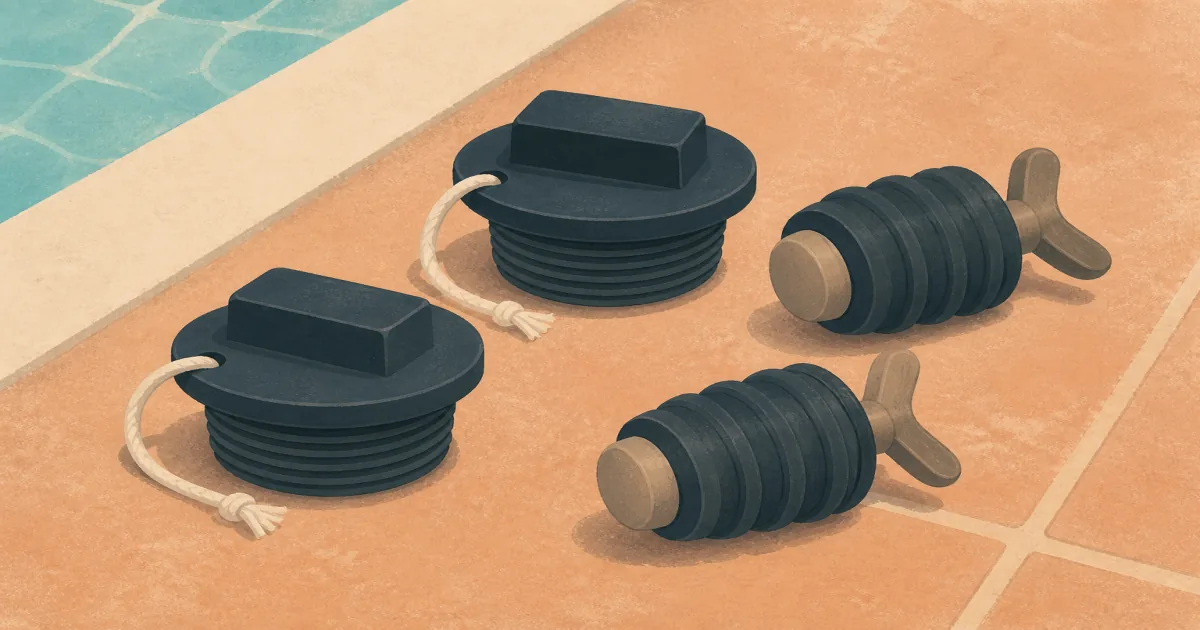
The short answer: Start with 1.5 inch threaded pool winterizing plugs for standard returns (the ATIE (paid link) style is the workhorse). Keep an expandable rubber plug (paid link) in the kit for smooth or damaged openings. Count every port before you drain the lines.
Our picks
Closing a pool is mostly sequencing: chemistry, water level, blow out lines, plug, cover. The plug step looks small and causes big spring repairs when it is skipped or done with the wrong size. Pool winterizing plugs (paid link) keep leftover water from freezing inside returns and related fittings.
This sits with the other deck and pad parts in accessories. If you want a broader closing shopping list, use pool closing kit as the companion pillar, then come back here for the actual plugs. More guides live on the blog, and the homepage maps the rest of the site.
Know which openings need plugs
Typical candidates:
- Wall returns / jets
- Some spa returns on shared systems
- Filter drain ports that take a threaded plug
- Other manufacturer-specified winter ports on the pad
Not every hole gets a plug. Skimmer winter plates, main drain covers, and air-relief valves each have their own hardware. Follow your filter and pump manuals for the pad side. Follow the pool builder notes for the shell side.
Write a simple map: “three returns on the deep wall, one spa return, one filter drain.” That map beats memory when it is 28 F and windy.
Kit hero: threaded 1.5 inch ATIE plug
The ATIE 1.5" Threaded Pool Spa Return Line Winterizing Plug (paid link) is the default buy for common threaded returns. Owners know it as an SP1022C-style plug with an O-ring. Clean the threads, seat the O-ring, tighten snug, stop before you crack the fitting.
Why this is the hero: review volume is large, the size matches many US jets, and the part is cheap enough to stock. Keep two extras in a labeled bag with your air blower and T-handle tools.
Skip this plug when the return is clearly 2 inch, or when there are no threads left to catch. Forcing the wrong thread pattern is how people destroy a return fitting the week before the cover goes on.
Kit backup: expandable rubber
The Aquatix Pro Expandable Pool Winterizing Plug (1.5" to 2") (paid link) covers the awkward openings. You insert the rubber body and tighten so it expands against the wall of the pipe or port. That is useful when threads are gone, the opening is slightly out of round, or the fitting was never threaded.
Use expandable plugs as a backup, not as an excuse to ignore correct thread size when threads exist. A well-matched threaded plug is usually the cleaner seal on a healthy return.
Inspect stainless hardware each spring. Replace any plug with a bent bolt or torn rubber before next closing.
Setup kit: how the two work together
Blow the lines first (or follow your local freeze method), then plug. Plugging a line that is still full of water defeats the point. If you use an air compressor or dedicated blower, keep pressure in a safe range for pool plumbing. Overpressure cracks fittings faster than a light freeze.
Closing sequence that keeps plugs honest
- Balance water and finish the last sanitizer steps your climate needs.
- Lower water to the level your cover and skimmer instructions require.
- Drain or blow the lines per your system design.
- Install pool winterizing plugs in every mapped return and listed drain port.
- Install skimmer winter gear if your setup uses a plate or plug kit.
- Set the pool winter cover and secure pool cover anchors.
Do not mix steps 4 and 6. A cover that is half on while you still need access to a stubborn return is how tools end up in the deep end.
Mistakes that show up at opening
Cross-threading. If it does not start by hand, stop. Clean debris from the threads. Try again. A plug that only tightens with a wrench from the first turn is already wrong.
Missing one return. Spas and bubblers hide ports. Walk the entire waterline with your map.
Reusing a cracked plug. A hairline crack from last year becomes a leak path. Toss it.
Using a main drain grate as a “plug.” Floor grates stay on the sump for suction safety. They do not winterize a return. Keep pool main drain cover shopping separate.
Overtightening plastic. Snug plus a slight turn is enough on most threaded plugs. Cracked returns cost more than a new plug pack.
Above-ground vs in-ground notes
Above-ground walls often use different return fittings than gunite. Read the stamped size on the fitting rather than assuming 1.5 inch. Some soft-sided or portable pools use unique plugs that come with the pool. Use those when the manual says so.
In-ground vinyl and concrete pools both still need correct return plugs. The shell type does not change the freeze math inside a pipe full of water.
If you buy a full pool closing kit, open the box and count plugs against your map. Kits sometimes under-count returns on larger pools.
Storage and spring removal
Store spare plugs dry in a small bin with a permanent marker note of sizes. In spring, remove plugs only when you are ready to reconnect circulation and refill as directed. Keep a towel and a bucket handy; leftover water in a line can surprise you.
Label each removed plug with the port it came from if sizes differ. Next November you will thank yourself.
Bottom line
Build a small setup kit: ATIE 1.5 inch threaded plugs for standard returns, plus an Aquatix expandable for odd openings. Count every port, blow or drain the lines first, then install pool winterizing plugs before the cover goes on. Correct size beats aggressive torque every time.
Frequently Asked Questions
What do pool winterizing plugs do?
They block water from sitting in return lines, some filter drains, and other fittings so freeze expansion does not crack plumbing. They are part of closing, not a swim-season safety grate.
What size plug do most returns take?
Many US pools use 1.5 inch threaded returns. Confirm with a thread gauge or by reading the fitting stamp. Do not force a 1.5 inch plug into a 2 inch port.
Threaded plug or expandable rubber?
Use a threaded plug like the ATIE 1.5 inch when the fitting has clean threads. Use expandable rubber when the opening is smooth, oval, or stripped.
How many plugs do I need?
Count every return, plus any filter drain or other port your closing instructions say to plug. Buy extras. Dropping one into a dark equipment pad in November is a bad time to discover you are short.
Do plugs replace a winter cover?
No. Plugs protect plumbing. A pool winter cover and pool cover anchors protect the water surface and deck edge. You usually need both systems.
Can I reuse plugs next year?
Often yes if the plastic is not cracked and the O-ring still seals. Replace any plug that cross-threaded or took a freeze hit. Cheap plugs are not worth gambling on a cracked return.
Where do main drain covers fit in?
Floor drain grates are a different part. See pool main drain cover. Do not use a winter plug as a floor grate, and do not use a grate as a return plug.