Pool Cover Anchors (2026): Brass Deck Hardware for Safety Covers
Pool cover anchors are the brass sockets in your deck that lock a safety cover down. Match the 3/4-inch hole, then buy a small pack for repairs or a bulk pack for a full install.
By Nate Brooks
Poolsidebasics is reader-supported. As an Amazon Associate we earn from qualifying purchases. Learn more.
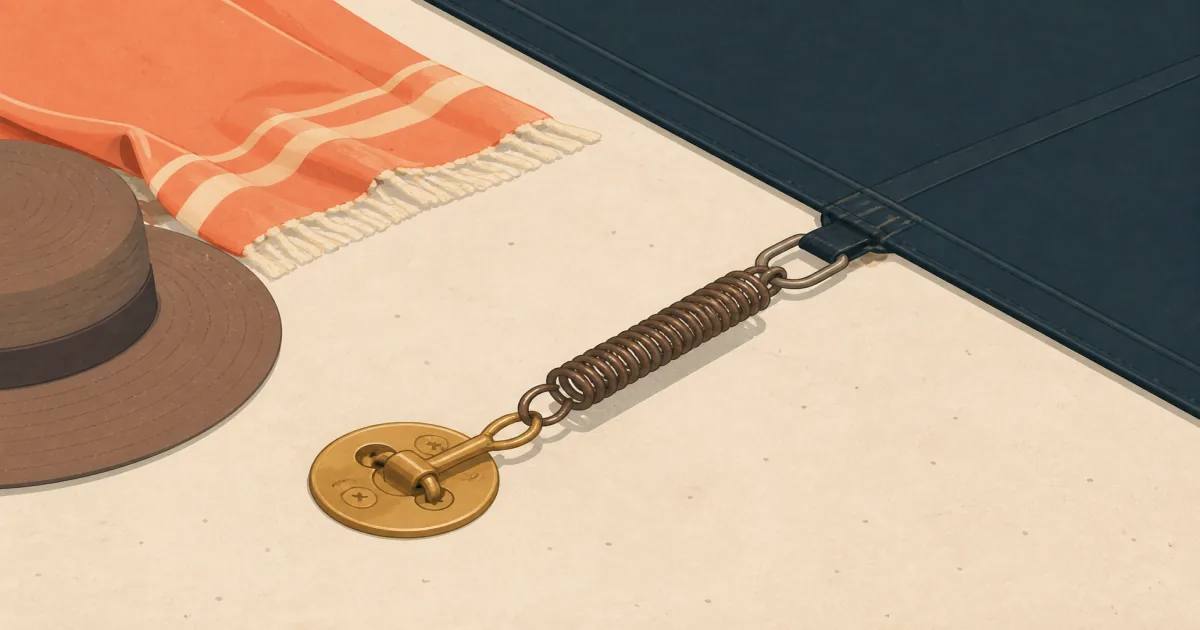
The short answer: Pool cover anchors are the brass deck sockets that hold an in-ground safety cover. Use Wood Grip 20 Pack Pool Cover Anchors (paid link) for scattered repairs, or the Poolzilla Brass Anchors 50 Pack (paid link) when you are installing or refreshing a full perimeter.
Our picks
A safety cover is only as strong as the hardware in the deck. The mesh or solid top can look perfect while three stripped sockets let a corner lift in a windstorm. That is when leaves, animals, and standing water start winning.
Pool cover anchors (paid link) fix that weak link. They are not decorative. They are the threaded brass pieces that take the spring load so the cover stays flat and walkable.
This guide is for in-ground decks with concrete or pavers. If you run an above-ground pool with a rail cover, you want clips, not deck anchors. Cross-check pool cover clips before you order the wrong hardware.
What pool cover anchors actually do
Each spring on a safety cover ends in a screw that seats into an anchor. The anchor sits flush when the cover is off, so the deck stays usable in summer. In fall, you open the insert, attach the spring, and tension the cover.
If an anchor spins in the hole, or the insert will not bite, that corner never gets proper tension. One bad socket can stress neighboring springs and warp the cover edge.
Repair pack vs full-deck kit
Start by walking the deck with the cover off. Mark every socket that spins, is missing an insert, or sits proud of the surface. That count decides pack size.
Repair pack: Wood Grip 20 Pack Pool Cover Anchors
The Wood Grip 20 Pack Pool Cover Anchors (paid link) is the practical mid-season fix. Twenty pieces is enough to replace a bad run of sockets and keep spares for next winter. The brass body fits a standard 3/4-inch hole used by most spring-style safety covers.
Owners like that replacements seat flush and take the same springs they already own. If your cover brand is a common residential mesh, this pack is usually the fastest path back to a tight corner.
Skip it only if you already know you need forty-plus new sockets. Buying three 20-packs gets messy when a single 50-pack would have covered the whole deck.
Full-deck kit: Poolzilla Brass Anchors 50 Pack
The Poolzilla Brass Anchors 50 Pack (paid link) is for a complete install or a yard where half the inserts are tired. Each piece is about 1-5/8 inches long and designed for a 3/4-inch hole in concrete or pavers.
Bulk packs make sense when you are matching a new pool winter cover and you do not want to stop mid-install for another order. They also help if last year’s freeze left a string of loose shells along the deep end.
You do not need fifty anchors for a spa cover with a handful of springs. Count first.
How to replace a bad anchor without wrecking the deck
- Remove the spring and unscrew the insert from the old shell.
- Pull or tap out the worn brass body. Clean grit from the hole.
- Seat the new shell flush. Do not leave a proud lip that snags shoes.
- Install the insert, attach the spring, and tension evenly with neighboring springs.
If the concrete hole is oval or cracked, epoxy or a larger repair may be needed before a new anchor will hold. A brand-new brass piece will not fix crumbled decking.
Work one side of the pool at a time so the cover never sits half-loose overnight. Wind finds unfinished corners.
Concrete vs pavers
Most brass anchors are sold for concrete and paver decks. Pavers need a clean, correctly sized hole so the shell does not rock. Soft sand joints that shift every season can loosen even good brass.
Wood decks and composite boards are a different hardware conversation. Do not force a concrete-style anchor into lumber and hope for winter snow loads.
Closing week checklist around the anchors
Clear the deck. Check every socket. Replace the bad ones before you stretch a new cover. Pump standing water once the cover is on with a pool cover pump. Finish chemistry with a pool closing kit so you are not opening to green water in spring.
Anchors are cheap insurance compared with a torn cover or a rescue call after a storm. If a spring feels mushy when you tension it, look at the socket before you blame the cover fabric.
Storage and summer deck habits
When the cover comes off, close inserts flush so they do not collect grit. A socket full of sand is harder to open in October and wears the threads faster. Rinse the deck after landscaping work near the coping.
Keep a couple of spare anchors with your closing tools. The failure that shows up on a cold Saturday is easier when you are not hunting a last-minute order.
Springs, straps, and what the anchor is not
The anchor is only the deck socket. Springs, straps, and the cover fabric are separate wear items. A healthy brass socket with a stretched-out spring still leaves a soft corner. Replace the spring if it no longer pulls to the same tension as its neighbors.
Do not use deck anchors as a workaround for an undersized cover. If the cover was ordered wrong, hardware will not invent the missing inches. Measure the pool and order a cover that matches before you rebuild every socket on the deep end.
Install day timing
Pick a dry afternoon. Wet concrete dust turns into paste in the hole and keeps a new shell from seating flush. Lay out anchors, a hammer or tamping tool the cover maker recommends, and the springs before you start. Stopping halfway with the cover flapping is how wind damage happens.
If you are closing the same weekend, finish anchors first, then stretch the cover, then set the pool cover pump in the low spot. Chemistry can wait until the physical close is secure.
Signs you waited too long to replace sockets
Look for insert screws that spin without biting, shells that rock when you push sideways, and deck lips that catch a sandal. Green algae in a permanently loose corner is another hint. Fix those sockets before the next storm forecast, not after the cover has already slapped itself thin.
Frequently Asked Questions
What are pool cover anchors?
Pool cover anchors are brass sockets set into the deck. The safety cover springs screw into those sockets so the cover stays tight and walkable.
What size hole do pool cover anchors use?
Most residential brass anchors fit a 3/4-inch hole and sit about 1-5/8 inches deep. Measure an existing good socket before you order.
Are pool cover anchors the same as above-ground cover clips?
No. Anchors are for in-ground safety covers on concrete or pavers. Above-ground rail clips are a different job. See pool cover clips.
How many pool cover anchors do I need?
Count every spring on the cover, then add a few spares. A 20-pack is for repairs. A 50-pack is for a full deck refresh.
Can I mix brands of anchors and covers?
Often yes, if the hole size and screw style match. Test one spring before you replace a whole side of the pool.
Why did my old anchors fail?
Years of freeze-thaw, grit, and overtightening strip the insert or leave the shell loose in the concrete. Replace the whole brass unit, not just the screw.
What else do I need for closing?
A fitted pool winter cover, a pool cover pump for standing water, and the chemistry side of a pool closing kit.