Pool Return Jet: How to Choose a Replacement Fitting
A pool return jet replacement needs to match your wall fitting and hose size, not just look similar in the product photo. Shut down the pump before opening it.
By Nate Brooks
Poolsidebasics is reader-supported. As an Amazon Associate we earn from qualifying purchases. Learn more.
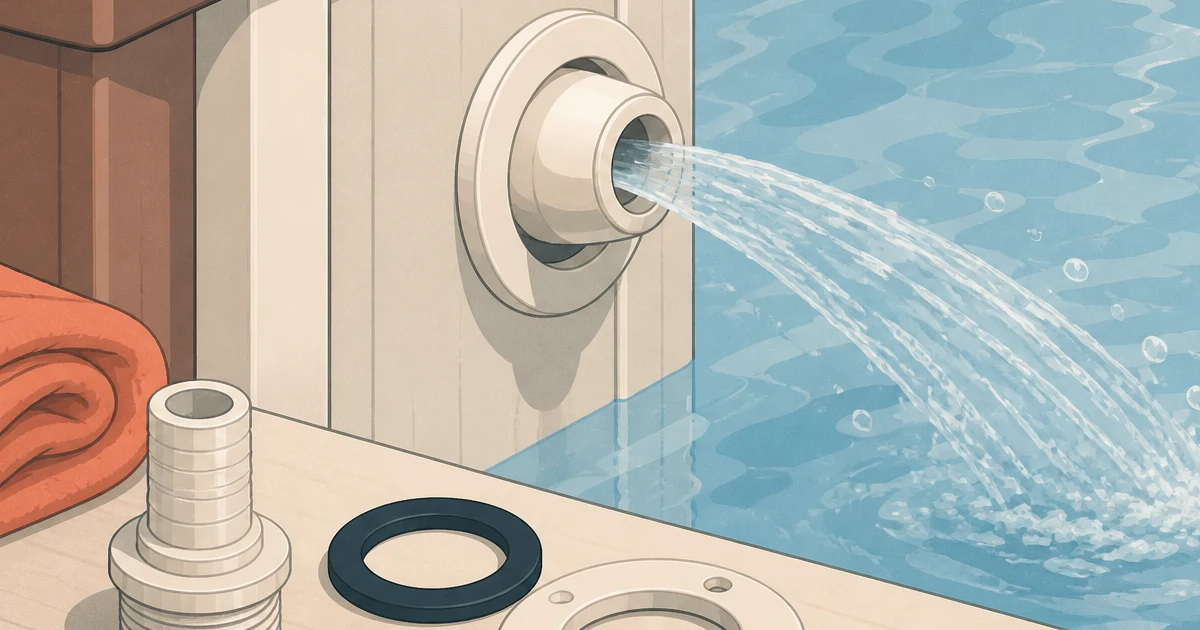
The short answer: A pool return jet replacement has to match your pool wall, opening, and hose connection. The FibroPool Above Ground Pool Return Jet Kit is a good all-in-one option for a matching above-ground setup. The ATIE SP1023 is another well-reviewed standard-opening option. Turn off the pump and confirm fit before opening the line.
Our picks
Poolsidebasics is reader-supported. As an Amazon Associate we earn from qualifying purchases. Learn more.
The return jet is the fitting that sends filtered water back into the pool. It looks simple, but a cracked body or bad gasket can cause a slow leak that gets worse every time the pump starts.
We checked live US Amazon listings and useful owner feedback for both kits. The FibroPool kit showed 4.5 stars from more than 1,400 ratings, and the ATIE kit showed 4.5 stars from more than 1,100. These are research-based picks, so match them to your pool before buying.
Know what you are replacing
An above-ground return assembly commonly includes a wall fitting, gasket or gaskets, locknut, directional eyeball, hose adapter, and clamp. Some kits include every part. Others include only the eyeball or one side of the fitting.
Do not order from the front view alone. Measure the wall opening, note whether the existing hose is 1.25 or 1.5 inches, and take photos from inside and outside the pool. If your pool has a brand-specific fitting, find the model in the manual before choosing a generic kit.
A return fitting is not the same thing as a skimmer. The skimmer pulls water toward the pump. The return sends filtered water back out. Both need to be sealed, but their parts are not interchangeable.
Choose a kit that matches the pool
The FibroPool Above Ground Pool Return Jet Kit includes a directional eyeball, wall fitting, three gaskets, hose adapter, clamp, and thread tape. It is a sensible pick when you need the whole assembly rather than one replacement piece.
The ATIE SP1023 Above Ground Pool Complete Return Outlet Jet Fitting is another full kit for many pools with a standard pre-cut wall opening. It has the familiar eyeball, locknut, gaskets, and adapters for 1.25-inch and 1.5-inch hoses.
If the old fitting is cracked, keep it until the replacement arrives. It is the best reference for the opening size and thread position.
Replace a return fitting safely
Switch off the pump at the breaker or timer. Close valves if your system has them. Do not loosen a fitting with the pump running or while the plumbing is pressurized.
The exact approach for water level depends on your pool and fitting. Some owners use winterizing plugs or lower the water below the return. Follow the pool maker's instructions. If the pool wall liner or plumbing layout makes you unsure, a pool service technician is cheaper than fixing a damaged liner.
Clean the wall surface before fitting new gaskets. Put each gasket where the manufacturer shows, tighten the locknut evenly, and avoid overtightening plastic parts. A twisted gasket can leak even if the nut feels extremely tight.
Aim the eyeball for useful circulation
After the fitting is sealed and the pump is running again, aim the eyeball slightly downward and around the pool. That helps move surface water toward the skimmer while circulating treated water through the body of the pool.
Do not point the return directly at the skimmer. That can create a short loop where newly returned water gets pulled right back out without mixing well. Avoid blasting a vinyl wall at close range too.
Good circulation supports the filter, but it does not replace chemistry. If your water is cloudy or green, test it first and follow a measured treatment plan. A strong return jet cannot solve algae by itself.
Check for leaks after startup
Fill and run the system, then inspect the outside wall fitting, hose connection, and inside gasket area. A dry paper towel is useful for spotting a tiny weep before it becomes a wet patch.
If it leaks, stop the pump and inspect the gasket placement. Do not keep tightening one side of a plastic locknut until it cracks. A clean, even seal is better than brute force.
Also check the hose for soft spots, cracks, and a loose clamp. If the hose itself is old, see our pool vacuum hose guide for the common connection sizes and replacement checks.
Bottom line
Replace a pool return jet with a kit that matches your wall opening, hose size, and pool type. The FibroPool and ATIE SP1023 kits are strong options for compatible above-ground pools. Shut off the pump, seat the gaskets carefully, and aim the finished jet slightly down and around the pool for better circulation.
Frequently Asked Questions
What does a pool return jet do?
It sends filtered water back into the pool. Its direction affects surface movement and how well the water circulates.
Can I replace a return jet with the pool full?
Some above-ground pools can be plugged and serviced, but the safe method depends on the fitting and pool. Follow your manual and do not improvise around a pressurized line.
Why is water leaking around my return fitting?
A loose nut, pinched gasket, cracked fitting, or wrong-size replacement can all cause a leak. Inspect each part before tightening.
Which way should I point the return jet?
Aim it slightly downward and around the pool to encourage circulation. Avoid pointing it straight at the skimmer or directly at a wall.