Best Pool Filter (2026): Sand Filter Pumps for Above-Ground Pools
The best pool filter for most above-ground pools is a sand filter pump sized to the pool's gallons, not the largest unit you can afford. Intex's SX2800 is the useful middle choice for many family pools.
By Harper Lin
Poolsidebasics is reader-supported. As an Amazon Associate we earn from qualifying purchases. Learn more.
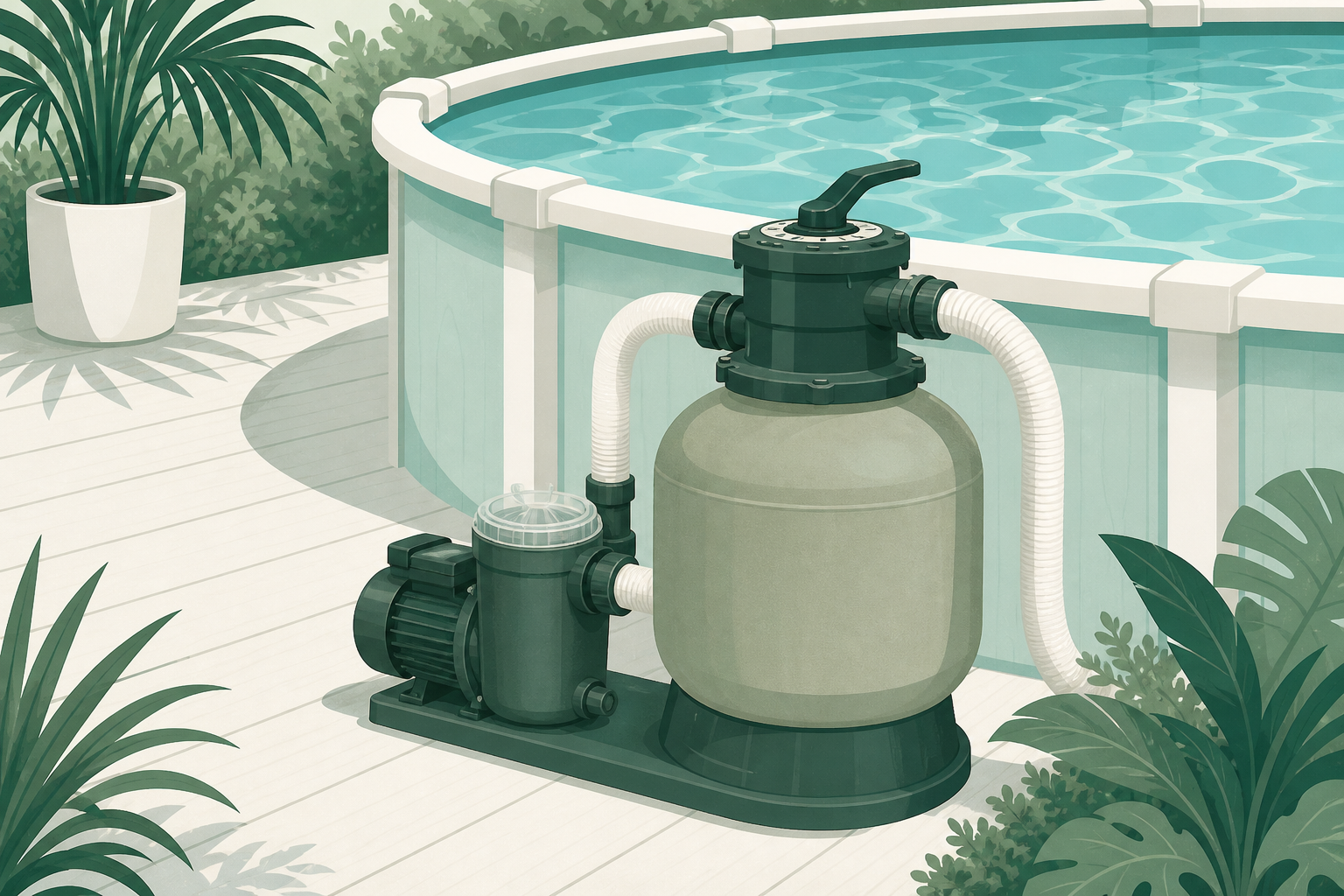
The short answer: The Intex SX2800 Krystal Clear Sand Filter Pump is the best pool filter for most medium above-ground pools. Choose the SX1500 for a smaller pool up to 8,400 gallons, or move to the 3,000 GPH Intex 26651EG if your pool is near the top of the size range.
Our picks
Poolsidebasics is reader-supported. As an Amazon Associate we earn from qualifying purchases. Learn more.
The filter that came with an above-ground pool often works, but it can feel like it spends more time being rinsed than filtering. A sand filter pump is a practical upgrade when you want a valve for backwashing, a timer, and enough circulation to recover after a busy weekend.
We compared published flow and pool-size limits with Amazon owner feedback. We have not installed these pumps side by side. All three listings were live on Amazon.com when checked, each showed a 4.5-star average from more than 21,000 ratings, and the review pages included detailed verified-purchase installation and clarity reports.
Match the filter to pool gallons
Pool filters are not a place to guess from the pump's horsepower or the size of the tank. Find your pool's gallon capacity first. Then use the listed capacity of the pump as a sensible upper limit.
The SX1500 is listed for pools up to 8,400 gallons. The SX2800 is listed for pools up to 17,200 gallons. The 3,000 GPH model is listed for pools up to 19,600 gallons. If you are close to a limit, choose the larger compatible option. If you are far below it, the smaller unit is usually easier to live with.
Best for most pools: Intex SX2800
The Intex SX2800 Krystal Clear Sand Filter Pump is the practical middle choice. Its 2,800 GPH pump flow suits the size of many family above-ground pools without pushing you into the largest unit in the range.
The six-way valve matters because it makes normal maintenance less annoying. You can filter, backwash, rinse, recirculate, drain, and close the system from one control. The timer is also useful. Set a normal circulation window, then check the water after parties or storms instead of leaving the pump on all day by default.
Amazon reviews repeatedly mention this as an upgrade from the small cartridge filter that comes with many pools. The common complaint is not filtration. It is setup. Measure the pad, check your hose diameter, and confirm whether you need adapters before the box arrives.
Best for smaller pools: Intex SX1500
The Intex SX1500 Krystal Clear Sand Filter Pump makes more sense when the pool is compact. Its 1,500 GPH rating is listed for pools up to 8,400 gallons, so it gives a small round or rectangular pool a real sand-filter setup without buying capacity you will not use.
This is the right pick when the current cartridge pump is the weak link, but your pool is not large enough to justify the SX2800. Owners' verified reviews often describe a clearer pool and easier routine compared with tiny cartridges. They also show why it is important to check the included hose fittings before starting.
Do not choose the SX1500 for a big pool because it is cheaper. A small pump that must run constantly can make the upgrade feel disappointing. Use your pool's gallon label, not the price tag, to decide.
Best for larger pools: Intex 3,000 GPH
The Intex 26651EG 3,000 GPH Sand Filter Pump is the large-pool choice. It is listed for above-ground pools up to 19,600 gallons, which gives it useful breathing room for a bigger pool with lots of swimmers, leaves, or sunscreen-heavy afternoons.
The automatic timer is a real quality-of-life feature. It helps you build a repeatable circulation schedule instead of asking someone to remember a switch every evening. Several verified buyers describe it as a major upgrade over their original cartridge pump, especially after seeing the water clear after the first proper cycle.
This model is not automatically better for every pool. It takes more deck space and is unnecessary for a small pool. Choose it because your water volume calls for it, not because the number sounds more impressive.
Sand versus cartridge filters
Sand filters are popular because normal cleaning is straightforward. When pressure rises, you move the valve to backwash, send dirty water out the waste line, rinse briefly, then return to filter. You do not need to pull apart a cartridge every time the flow drops.
Cartridge systems still have a place. They can filter fine debris well, and a quality large cartridge can be excellent. The issue is usually the undersized cartridge pump bundled with a starter pool. If you are tired of hosing down a small paper filter every few days, a sand filter is an understandable upgrade.
Either system needs care. Keep the skimmer basket clear, note the clean pressure after installation, and follow the manufacturer's backwash guidance. A dirty filter can make chlorine look ineffective when the water simply is not moving well.
Check these details before you order
Start with your hoses. Many above-ground pools use 1.25-inch or 1.5-inch connections, and a pump upgrade may need adapters. Confirm the diameter at the pool wall and at the pump before you buy anything.
Next, plan the electrical outlet and the base. The pump needs a stable, level, weather-safe location near enough to the pool for the hoses to reach without kinking. Do not use an extension cord unless the manufacturer specifically allows it. A GFCI-protected outlet is the sensible baseline for pool equipment.
Finally, plan for the media and water. Sand filter pumps need the correct amount and type of filter media from the manual. When you backwash, the water has to go somewhere safe. Do not point the waste hose at your neighbor's yard or a spot that will flood your own equipment pad.
Keep the water clear after the upgrade
A larger filter pump will not fix chemistry on its own. Test chlorine and pH with a pool test kit, especially after a storm or a crowded weekend. If the pool is green, deal with the algae problem first, then let the filter catch what the treatment kills.
Brush the walls, skim leaves, and run the cleaner as well. A filter moves water and catches suspended debris. It cannot scrape a waterline or pull leaves off the bottom by itself. For hands-off floor cleaning, see our guide to the best above-ground pool cleaner.
Bottom line
Buy the Intex SX2800 if your above-ground pool sits in the common middle range and you want a useful step up from a cartridge pump. Buy the SX1500 for a smaller pool, and the Intex 26651EG when your gallon capacity calls for more flow. Measure your fittings, use a stable GFCI-protected setup, and size the filter to the pool you actually own.
Frequently Asked Questions
What size pool filter do I need?
Start with your pool's gallon capacity, then use the pump maker's stated pool-size limit as a ceiling, not a target. A medium-size filter is usually a better match than a huge pump that needs awkward adapters or runs water too fast through the system.
Are sand filters better than cartridge filters?
Sand filters are convenient for many above-ground owners because they backwash through a valve instead of requiring frequent cartridge rinsing. Cartridge filters can catch fine debris well, but the small versions bundled with pool kits often need more hands-on cleaning.
How many hours a day should I run my pool filter?
Run long enough to circulate the pool's water at least once, then adjust for heat, swimmers, and water clarity. Many owners start around six to eight hours in swim season and check the water rather than relying on a fixed rule.
Can I put a bigger filter pump on my above-ground pool?
Only if the pool's hoses, fittings, electrical supply, and manufacturer guidance support it. Bigger is not automatically better. A mismatched pump can create leaks, poor circulation, or a frustrating adapter hunt.
Do I still need to clean a sand filter?
Yes. Backwash when the pressure rises above the clean baseline in your manual. You may also need a deeper seasonal clean. Our pool filter cleaner guide explains the difference between routine backwashing and a real cleaning job.