Pool Filter Balls (2026): Light Media That Replaces Filter Sand
Pool filter balls swap heavy sand for light fiber media that still traps fine debris. Match the pack weight to your filter's sand rating, then rinse on a schedule instead of wrestling wet bags every season.
By Harper Lin
Poolsidebasics is reader-supported. As an Amazon Associate we earn from qualifying purchases. Learn more.
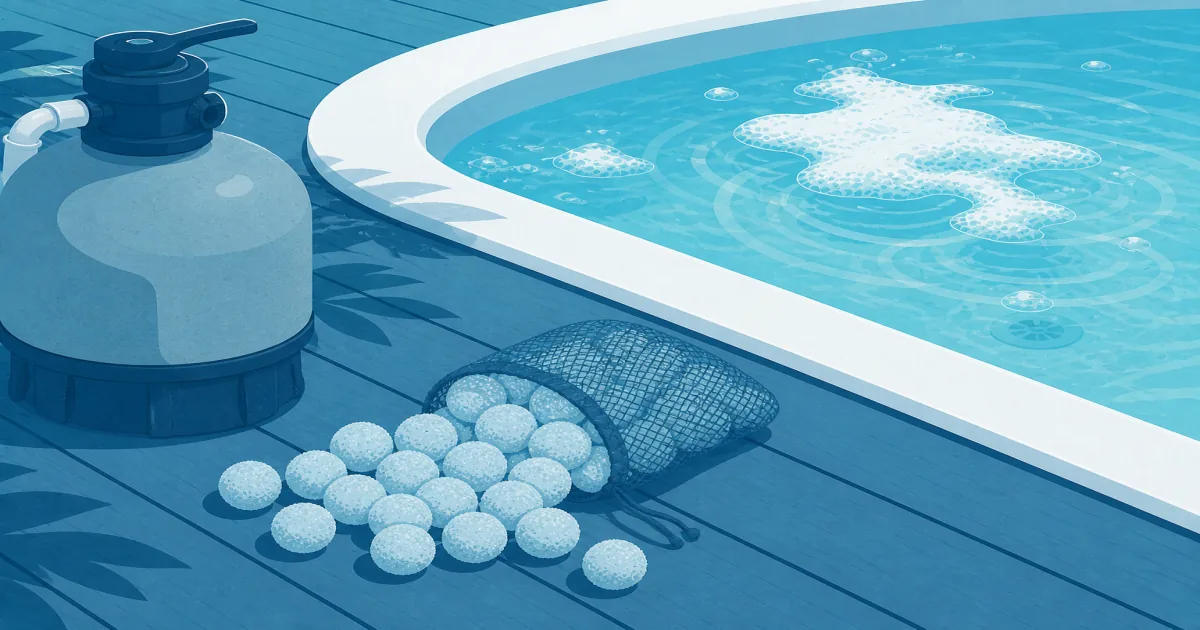
The short answer: Pool filter balls are light fiber media that replace sand in a sand filter tank. Start with SETHVILL 3.1 lbs (paid link) for filters rated around 100 lb of sand. Move to SETHVILL 4.6 lbs (paid link) for roughly 150 lb tanks. Choose AQUASTRONG 3.1 lbs (paid link) when you want the same size from another brand.
Our picks
Sand works. It is also heavy, dusty, and messy to change. Filter balls exist for owners who want the sand-filter tank they already own without hauling three wet bags across the deck every few years.
They are not magic. Chemistry still matters, and a clogged multiport or broken lateral will ruin any media. When the tank is healthy, though, a sized pack of balls is usually easier to install and rinse than fresh silica sand.
If you prefer traditional media, stay with our best pool filter sand guide. If the whole pump and tank are due for replacement, start with best pool filter instead of swapping media alone.
What pool filter balls actually do
Fiber filter balls sit in the same tank that normally holds sand. Water still enters the top, passes through the media bed, and exits through the laterals. The difference is weight and particle size. A few pounds of balls typically replace 50 to 150 pounds of sand, depending on the pack.
Owners usually switch for three reasons. The first is lifting. The second is finer filtration claims on the label, often in the 3–5 micron range versus coarser sand. The third is cleaning. Balls can come out of the tank and rinse in a mesh bag, which sand never does cleanly.
Expect a learning curve on the first change-out. You still open the tank, protect the laterals, and size the fill to the manual. The payoff is a lighter bag and less backwash water for many systems once the bed is settled.
Match pack size to the sand rating
Do not buy by pool gallons alone. Buy by the sand weight printed on the filter label or in the manual.
If your filter lists 125 lb, size up slightly rather than underfill. An underfilled bed channels water and leaves cloudy returns. An overfilled bed can pack against the standpipe or multiport. When in doubt, follow the manufacturer’s media instructions over Amazon pack marketing.
Top pick: SETHVILL 3.1 lbs
SETHVILL 3.1 lbs Pool Filter Balls (paid link) is the pack most backyard owners should try first. It lines up with the common 100 lb sand rating, and the review volume is deep enough that complaints and wins are easy to read before you buy.
Install is straightforward. Drain and open the tank, remove old sand carefully so laterals stay intact, then pour the balls around the standpipe. Leave a little freeboard if the manual shows a media height line. Close up, rinse or backwash until the sight glass runs clear, then return to filter mode.
Owners who like this pack talk about clearer water and easier handling. The usual complaints are about skipping the rinse step or buying the wrong size for a larger tank. Neither is a product defect. Both are sizing and setup issues.
Best for larger filters: SETHVILL 4.6 lbs
SETHVILL 4.6 lbs (paid link) is the same media idea scaled for filters that call for roughly 150 lb of sand. If your tank already needs three 50 lb sand bags, this is the cleaner one-bag swap.
Do not force this pack into a small above-ground filter. Extra media can crowd the valve and laterals. Check the sand rating first, then choose the 4.6 lb bag only when the tank is actually that size.
Cleaning stays the same. When pressure climbs, pull the balls, wash them, and reload. Keep a spare mesh bag if you want a quick swap while one set dries.
Best alternate brand: AQUASTRONG 3.1 lbs
AQUASTRONG 3.1 lbs (paid link) covers the same 100 lb sand-equivalent lane with a different brand and packaging. Choose it when SETHVILL is out of stock, priced oddly, or you simply prefer another seller with solid recent feedback.
Treat it like any other 3.1 lb pack. Confirm the sand rating, protect the laterals during the pour, and rinse until the water runs clear. Brand loyalty matters less than correct fill weight and a clean tank.
How to switch from sand without making a mess
Shut off power to the pump. Open the multiport to a safe position for opening the tank, then release pressure. Scoop or wet-vac the sand out without snapping laterals. Rinse the tank shell and check the standpipe O-ring before you add balls.
Pour slowly so balls do not jam under the laterals. Close the tank, prime the pump, and run a rinse or backwash cycle until the waste line clears. Note your clean pressure on the gauge so you know when the next cleaning is due.
Skip clarifier and floc while the new bed is settling unless a label specifically allows it. Some fiber media packs up when sticky chemicals hit a fresh fill. Rebalance chlorine and pH first, then decide if a pool clarifier is still needed.
When to stick with sand instead
Stay with sand if your warranty or filter brand forbids alternatives. Stay with sand if you already buy cheap local bags and do not mind the weight. Stay with sand if you have never opened the tank before and do not want a first maintenance project mid-season.
Filter balls shine when delivery of 150 lb of sand is painful, when you want a rinseable bed, or when you are already rebuilding the tank and want a lighter refill. They are a media choice, not a fix for algae, low chlorine, or a failing pump.
Bottom line
Buy SETHVILL 3.1 lbs for most 100 lb sand filters. Buy SETHVILL 4.6 lbs (paid link) when the tank needs about 150 lb of sand. Keep AQUASTRONG 3.1 lbs (paid link) as the alternate brand in the same common size. Match the pack to the manual, rinse when pressure rises, and your sand filter can stay useful without the heavy bags.
Frequently Asked Questions
Do pool filter balls work as well as sand?
Many owners see clearer water and lower filter pressure after a clean install, because fiber media traps finer debris than typical #20 sand. Results still depend on pump runtime, chemistry, and rinsing the balls when pressure climbs.
How many pounds of filter balls do I need?
Match the sand weight in your filter manual, not the tank diameter. A filter that needs 100 lb of sand usually takes a 3.1 lb ball pack. A 150 lb sand rating usually wants the 4.6 lb pack.
Can I put filter balls in any sand filter?
Most residential sand filters accept them, but read the manual first. Some warranties or laterals are sand-only. Never dump balls into a cartridge or DE filter that is not designed for loose media.
How do you clean pool filter balls?
Shut down the pump, open the tank, and remove the balls into the mesh bag. Rinse or machine-wash gently, then reload and backwash or rinse per the valve instructions before returning to filter mode.
Will filter balls reduce backwashing?
They often stay cleaner longer than sand, so many pools backwash less often. Watch your filter pressure gauge and clean when pressure rises about 8–10 psi over the clean baseline.