Non Chlorine Pool Shock (2026): When MPS Beats a Chlorine Knockdown
Non chlorine pool shock is for routine oxidation when you want clarity without another big chlorine spike. It is not a substitute for a real sanitizer.
By Nate Brooks
Poolsidebasics is reader-supported. As an Amazon Associate we earn from qualifying purchases. Learn more.
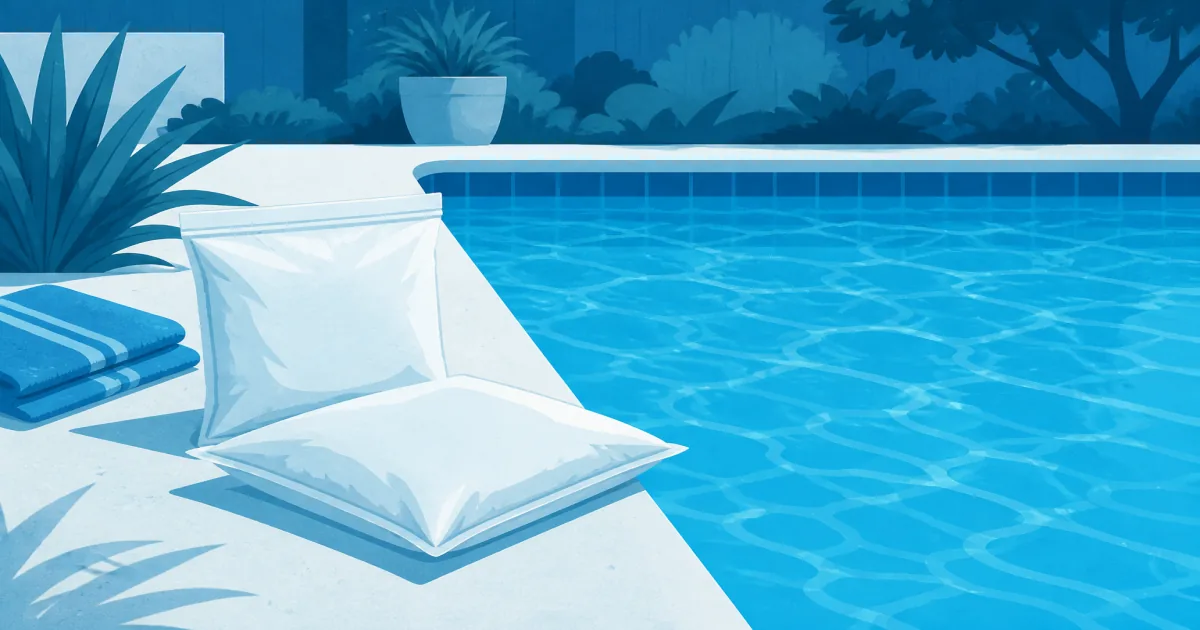
The short answer: Use non chlorine pool shock when the water needs oxidation and you do not want another big chlorine spike. Doheny's Chlorine-Free Oxidizing Shock is the easiest backyard-pool pick in 1 lb bags, and Rx Clear Chlorine-Free Pool Shock is a strong alternate pack for the same MPS job.
Our picks
Non chlorine pool shock sounds like a softer version of regular shock. It is not. It is a different job. Chlorine shock raises free chlorine so the pool can kill what is growing. MPS oxidizes the leftover swimmer waste that makes water smell sharp and look dull even when your test strip still shows free chlorine.
That is why people reach for it after a busy weekend. The sanitizer is not gone. The water just feels tired. If the pool is green, cloudy from an algae event, or testing near zero chlorine, skip this lane and go back to a real chlorine shock plan.
When non chlorine pool shock is the better move
Use non chlorine pool shock when:
- Free chlorine is already in range
- The water smells like combined chlorine after heavy use
- You want to swim again soon after dosing
- You do not want to push CYA or calcium higher with another chlorine product
It pairs well with a steady tablet or salt schedule. Think of it as a cleanup pass, not the whole sanitation plan. If you are still sorting basic shock choices, start with pool shock and come back here for the MPS option.
Pick by how you dose through the season
Doheny's Chlorine-Free Oxidizing Shock fits most backyard pools because the 1 lb bags match the usual “one pound per 10,000 gallons” habit. It is the cleaner recommendation when your main goal is weekly oxidation and a short wait before swimming.
Rx Clear Chlorine-Free Pool Shock is the better backup if you want another 12-pack style MPS option for pools and spas. It is useful when chlorine is already fine and you only need the oxidizer step.
How to use it without confusing it for sanitizer
Test first. If free chlorine is already low, oxidize later. Broadcast the labeled dose with the pump running so the granules dissolve and move through the pool. Give it the short circulation window on the label, then retest.
Do not stack a huge chlorine shock and a huge MPS dose in the same hour just because the water looks off. Fix the cause. Brush. Clean the filter if pressure is high. Check pH and alkalinity with a pool test kit. Oxidation works better when the basics are not fighting you.
When to skip non chlorine pool shock
Skip it for mustard algae, black algae, or a pool that has sat green for days. Those problems need sanitizer power, brushing, and often a filter cleanup. Skip it if you have not measured free chlorine at all and are guessing from smell alone.
Also skip it as a replacement for weekly chlorine tablets or a salt cell. MPS does not leave a lasting residual the way a sanitizer does. If the water is only a little dull and chemistry looks fine, a pool clarifier may be enough.
Bottom line
Non chlorine pool shock is the weekly oxidizer lane. Use Doheny's Chlorine-Free Oxidizing Shock when you want simple pool bags, or Rx Clear Chlorine-Free Pool Shock when you want another MPS pack on hand. Reach for chlorine shock instead when the pool needs a true sanitizer knockdown.
Frequently Asked Questions
What is non chlorine pool shock?
Non chlorine pool shock is usually potassium monopersulfate (MPS). It oxidizes oils, lotions, and combined chlorine demand without adding more chlorine to the water.
Is non chlorine pool shock the same as chlorine shock?
No. Chlorine shock raises free chlorine fast and is better for green water or a true sanitizer rescue. Non chlorine pool shock is for oxidation and clarity when sanitizer is already present. See our pool shock guide for the chlorine lane.
Can I swim soon after non chlorine pool shock?
Many MPS labels allow swimming much sooner than a heavy chlorine shock, often around 15 minutes after it dissolves and circulates. Always follow the product label for your pool size.
Does non chlorine pool shock kill algae?
Not by itself. It is an oxidizer, not a full sanitizer. If the pool is green or free chlorine is gone, fix sanitizer first.
Will non chlorine pool shock raise CYA or calcium?
A true MPS oxidizer should not add cyanuric acid or calcium the way some chlorine shocks do. That is one reason people use it for weekly maintenance.
How often should I use non chlorine pool shock?
Many owners use it weekly during heavy swim weeks, or after parties, when the water smells like chloramine but free chlorine still tests okay.
Can I use non chlorine pool shock in a saltwater pool?
Yes, as long as the label says it is compatible. It can help burn off bather waste so the salt system is not doing all of the oxidation work alone.