Pool Shock (2026): Cal-Hypo Knockdowns vs Fast Weekly Bags
Pool shock is a strong weekly oxidizer, not a daily chlorine tablet. Use cal-hypo for a real knockdown, a fast weekly bag when you want to swim soon, or a chlorine-free oxidizer when sanitizer is already in range.
By Harper Lin
Poolsidebasics is reader-supported. As an Amazon Associate we earn from qualifying purchases. Learn more.
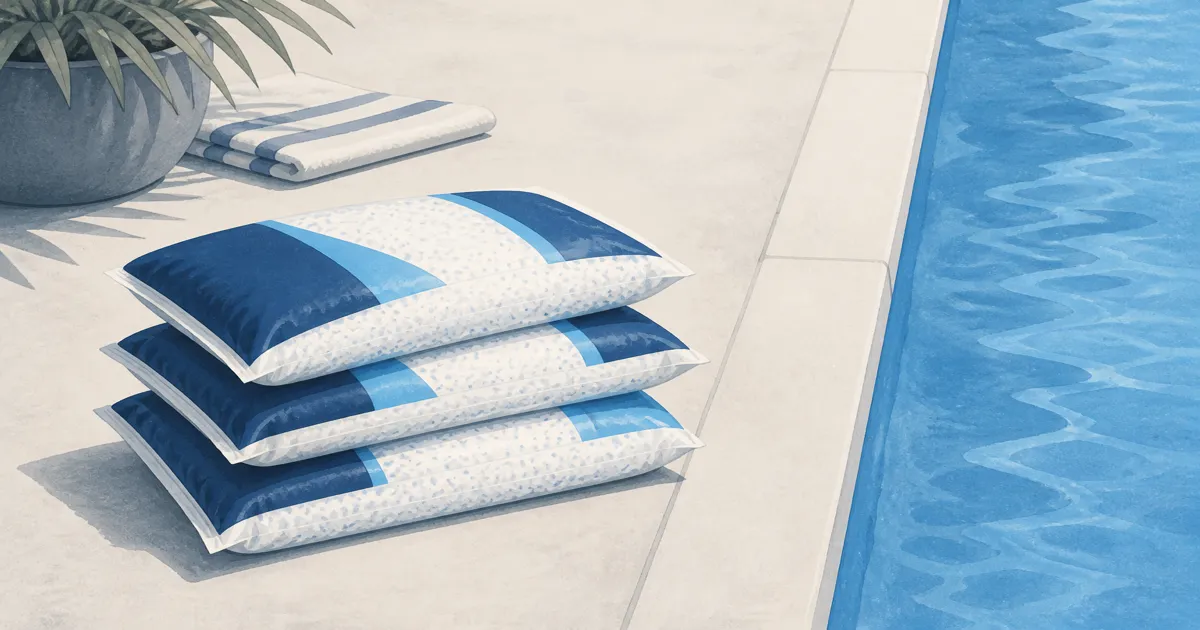
The short answer: Start with HTH Shock Advanced as the pool shock for most green or cloudy backyard pools. Choose Clorox Shock XtraBlue when you want a fast weekly dose you can swim after, or In The Swim Chlorine-Free Pool Shock when sanitizer is already in range and you only need to oxidize.
Our picks
Pool shock is the strong dose you add to knock down contaminants that daily chlorine cannot finish. Tablets in a floater keep a residual. Shock is the reset after heat, rain, or a weekend full of swimmers.
It is not a daily tablet, and it is not algaecide. Pick cal-hypo for a real knockdown, a fast weekly bag when you want to swim soon, or a chlorine-free oxidizer when chlorine is already holding. Picks come from live US listings and owner reviews, not a pool-lab bake-off.
How we chose
Selection criteria, in order:
- Chemistry match: cal-hypo knockdown vs fast weekly vs non-chlorine oxidizer
- Stabilizer load: whether weekly bags add CYA
- Swim wait: labeled re-entry versus a full filter cycle
- Surface caution: vinyl-safe broadcast habits, not a pile on the floor
- Review quality: thousands of recent owner notes, not stub listings
- Pack size: enough one-pound bags for a real summer habit
We skipped anything under 4.0 stars and thin review counts that read like placeholders.
Three kinds of pool shock
Cal-hypo (calcium hypochlorite) is the classic knockdown. It raises free chlorine hard and does not add cyanuric acid. That is why it is the default when water is dull, cloudy, or heading green. The tradeoffs are calcium creep over a long season and a longer wait before swimming.
Fast weekly bags like Clorox Shock XtraBlue dissolve quickly and advertise a short swim wait. They are the habit product for owners who shock on Saturday and want the pool usable the same afternoon. Many of those formulas are stabilized, so CYA climbs if you also run 3-inch tablets all summer.
Non-chlorine shock is potassium monopersulfate (MPS). It burns off organics without spiking chlorine. Use it when free chlorine is already in range and the water just smells or looks tired. It will not sanitize a swamp.
Which bag matches your water
Top pick: HTH Shock Advanced
The HTH Shock Advanced 12-pack is the cleanest answer for most people searching pool shock. It is a cal-hypo formula that sanitizes without adding CYA, which matters if you already use stabilized tablets in a pool chlorine floater.
Each one-pound bag is the weekly unit most labels assume. Owners who like it talk about cloudy water turning around within a day when the pump actually runs and the filter is not packed. The honest limits are calcium rise over months and the need to keep granules moving, not sitting on vinyl.
Broadcast into the deep end with circulation on. Brush after. Retest the next morning. If the filter pressure is high, clean the media first or the haze has nowhere to go. Our pool filter cleaner guide covers that soak.
Best fast weekly: Clorox Shock XtraBlue
The Clorox Shock XtraBlue 6-pack is the weekly convenience lane. It dissolves fast, is labeled swim-ready in about 15 minutes, and is marketed not to swing pH the way a sloppy cal-hypo dump can.
That is the right pick when the pool is already pretty close, you just need the Saturday oxidize, and people want to swim after lunch. It also carries algae-fighting crystals, which helps as prevention, not as a substitute for brushing a full bloom.
The tradeoff is stabilizer. If your CYA is already high, another season of fast weekly bags can lock chlorine. Test CYA monthly in summer. If it is climbing, switch the knockdown weeks to HTH and keep tablets modest.
Best non-chlorine: In The Swim Chlorine-Free Pool Shock
In The Swim Chlorine-Free Pool Shock is MPS in 24 one-pound bags. It oxidizes sweat, oils, and leftover organics without raising free chlorine. That is useful in salt pools, bromine spas you also treat, and any backyard where chlorine is already in range but the water looks tired.
Use it as a weekly oxidizer, not as the rescue product. If the test kit reads near zero, you need a chlorine shock first. Non-chlorine cannot invent sanitizer.
Owners who like it mention less “chlorine smell” after parties, which is usually chloramine, not too much chlorine. MPS helps there. It will not replace a green-water knockdown.
How to add shock without bleaching the liner
Test first. Brush walls. Run the pump. Then add the labeled dose to the deep end, walking the bag so granules spread. Keep a concentrated pile off steps and vinyl floors.
Stay out until the label and your kit agree it is safe. Never mix shock with acid, algaecide, or clarifier in a bucket. Add one product, circulate, then decide if you still need the next bottle.
If the water is fully green, shock and filter before you reach for algaecide. Dead algae has to leave through the filter. A packed cartridge just recirculates soup.
Bottom line
For most backyard pools, start with HTH Shock Advanced. Move to Clorox Shock XtraBlue when a short swim wait matters more than a hard knockdown. Keep In The Swim Chlorine-Free Pool Shock for weeks when chlorine is already holding. Test before you pour.
Frequently Asked Questions
How often should I add pool shock?
Weekly in swim season is the usual habit, plus after heavy use, big rain, or a party. Test first. If free chlorine is already high, you may only need a non-chlorine oxidizer.
Can I swim right after shocking?
Only if the label says so and your test kit agrees. Clorox Shock XtraBlue is labeled swim-ready in about 15 minutes. Cal-hypo knockdowns like HTH Shock Advanced usually need more filter time. Stay out until free chlorine is back in the 1 to 4 ppm band.
Cal-hypo, dichlor, or non-chlorine?
Cal-hypo (HTH) is the workhorse when water is dull or green. Fast weekly bags (Clorox XtraBlue) are the convenience lane. Non-chlorine MPS (In The Swim) oxidizes sweat and oils without raising chlorine. It is not a sanitizer replacement.
Do I pre-dissolve the bag?
Follow the label. Many owners broadcast granules into the deep end with the pump on. Never mix shock in a bucket with other chemicals. Keep it off vinyl walls in a concentrated pile.
Will shock replace algaecide?
No. Shock raises sanitizer and burns off contaminants. Algaecide is extra insurance after the water is moving again. See our pool algaecide guide for that follow-up.
What should I test before I pour?
Free chlorine, pH, and alkalinity at minimum. Check CYA if you use tablets all summer. Guessing the dose on unbalanced water wastes product. Use a kit from our best pool test kit guide.