Gas Pool Heater (2026): Natural Gas vs Propane Sizing
A gas pool heater is the fast lane when you need a real temperature jump tonight. Match fuel type and BTU to the pool, then leave heat pumps and solar for the hold.
By Alex Turner
Poolsidebasics is reader-supported. As an Amazon Associate we earn from qualifying purchases. Learn more.
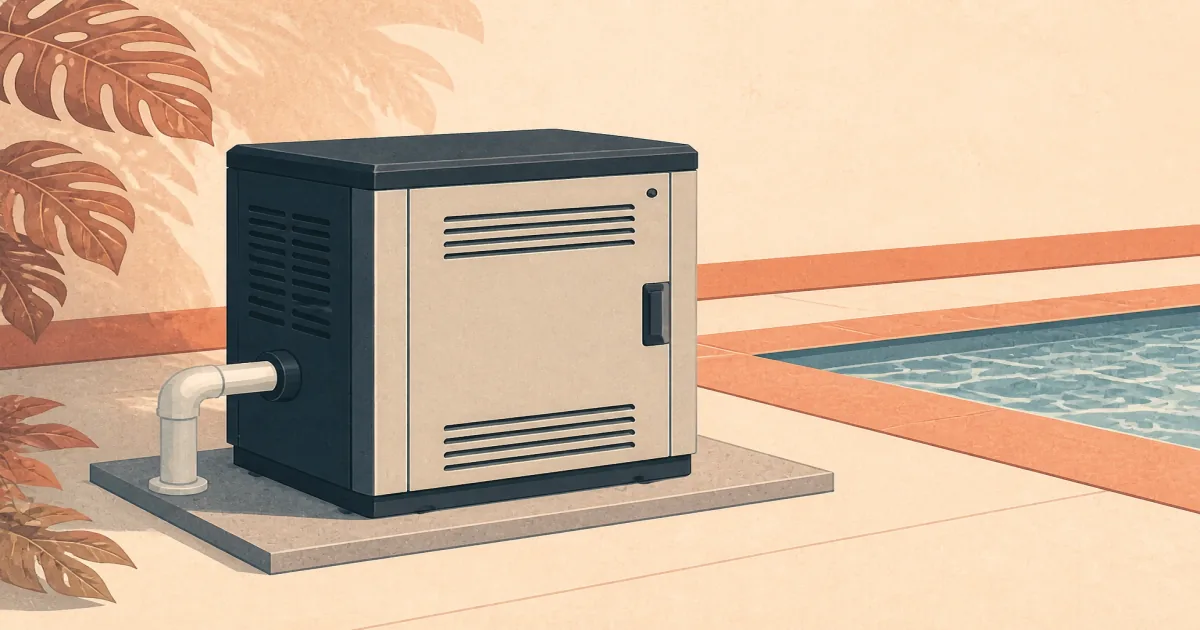
The short answer: Choose the Hayward H250FDN when you have natural gas and a mid-size pool that needs a fast jump. Choose the Hayward H400FDP when you are on propane and the shell is large enough to justify 400k BTU.
Our picks
A gas pool heater burns fuel to push water temperature up quickly. That is the whole pitch. Heat pumps sip electricity over long runs. Solar panels wait on the sun. Gas is the Saturday-night lever when the forecast turned cold and guests are already invited.
Cross-link the slower options before you buy fire. If mild air and cheap holds matter more than speed, stay on the pool heat pump guide. If you only need a daytime bump in a sunny climate, compare a pool solar heater. This page is for combustion heat on a real equipment pad. More gear lives on the blog, and the homepage maps the rest of the site.
Gas vs heat pump vs solar
Many pads run gas for the jump and a cover for the hold. A variable speed pool pump helps because you can raise flow while the heater calls for heat, then drop back for filtration.
Natural gas vs propane at a glance
Natural gas pick: Hayward H250FDN
The Hayward H250FDN Universal H-Series 250,000 BTU Natural Gas Heater is the practical starter for many US in-ground pools that already have gas. Owners buy it when the heat pump crawls in April and they want swim-ready water without waiting three days.
Expect a licensed tech for the gas line, venting clearances, and electrical. The Universal H-Series layout is common on residential pads, which makes service parts easier to source later. Keep chemistry balanced so the cupro-nickel exchanger is not fighting scale or metals every season.
Propane pick: Hayward H400FDP
The Hayward H400FDP Universal H-Series 400,000 BTU Propane Heater is the move when the street has no natural gas and the pool is large. Propane tanks and regulators need correct sizing. Undersize the supply and the heater will light, then starve mid-cycle.
Use 400k when surface area and climate say a 250k cabinet will feel soft. If the pool is modest, do not buy BTU for bragging rights. Extra capacity costs more to own and still needs the same professional install.
Sizing without the brochure fog
Ask three numbers: gallons, surface area, and how many degrees you need in how many hours. A spa spillover that shares the heater is another load. Cold wind across a large surface eats heat faster than a sheltered rectangle.
Then decide fuel. Retrofitting natural gas across a yard can cost more than the heater. Propane is simpler to introduce and more expensive to burn. Neither choice rescues a missing cover or a pump that cannot feed the heater’s minimum flow.
Install and ownership basics
Park the cabinet on a solid pad with the clearances in the manual. Leave service space so techs can open panels. Pair it with clean filtration so the exchanger sees water, not grit. Track temperature with a simple thermometer for a week after install so you learn how fast your specific pool responds.
If the heater short-cycles, look at flow, bypass settings, and dirty filters before you blame the burner. If it never reaches setpoint, check cover use, overnight air, and whether BTU was undersized for the surface.
When to skip gas
Skip gas if your climate stays mild and you only need a gentle hold. A heat pump will usually cost less to run. Skip gas if HOA or code makes combustion install painful. Skip gas if you refuse licensed plumbing. These cabinets are not plug-and-play patio toys.
Buy gas when speed is the product. That is the honest category line.
Fuel cost without the scare quotes
Natural gas is often cheaper per BTU delivered when the meter is already at the pad. Propane wins on availability. Neither is free. Run the heater to recover, then protect the gain with a cover overnight instead of leaving the burner on as a night light.
If your utility rates swing seasonally, ask the installer for a rough hourly burn estimate at your BTU size. Compare that to a week of heat-pump runtime in the same climate. The math usually says gas for spikes and electric or solar for holds.
Chemistry that protects the exchanger
Hot metal and wild water chemistry do not mix. Keep pH and alkalinity in range, watch metals after fill water changes, and do not let salt drift into chaos. A heater that shortens its life after two seasons of scale is an expensive way to learn that testing still matters.
Brush and filter before big heat weekends so the exchanger sees water, not a grit smoothie. If you shock the pool, give circulation time before you demand a huge temperature jump on top of a chemical event.
Pad checklist before the truck arrives
Confirm gas type on the nameplate matches the line you have. Confirm electrical for controls and any draft inducer. Confirm PVC unions and bypass parts are on the order list. Confirm a pressure relief valve if the manual requires one. Confirm the pad is level and the clearances match the booklet, not the Instagram photo.
When the unit lands, photograph the serial plate and keep the manual in a dry spot. Future you will thank present you when a board needs a part number in July.
Who this guide is for
This page is for US homeowners sizing a real gas pool heater against heat pumps and solar, not for commercial aquatic centers. If your job is a resort plant room, talk to the engineer who owns that pad. If your job is a backyard Friday swim, pick fuel and BTU honestly, hire the gas work, and keep the cover in the rotation.
Frequently Asked Questions
Is a gas pool heater better than a heat pump?
Better for speed. A pool heat pump wins for cheap long holds when outdoor air is mild. A gas pool heater wins when you need several degrees before Friday night and the air is cool.
Natural gas or propane?
Use the fuel you already have. Natural gas is usually cheaper to run if the meter is at the pad. Propane works anywhere you can site a tank and regulator correctly.
How many BTU do I need?
Rough rule: larger surface area and colder nights want more BTU. A 250k unit covers many mid-size residential pools. Big lagoons often want 350k to 400k. Ask the installer to size from gallons, surface, and climate, not from the listing photo.
Will it work with a salt system?
Most modern exchangers are built for treated and salt water when chemistry stays in range. Keep salt, pH, and metals under control so the heater is not fighting scale.
Do I still need a solar cover?
Yes if you care about overnight loss. A solar pool cover keeps the heat you paid for. Gas does not cancel evaporation.
Can I install it myself?
Plumbing unions are one thing. Gas piping, venting, and electrical interlocks are licensed work in most US cities. Budget for a pro even if you can glue PVC.
How loud is it?
Expect a burner roar when it fires, then quieter idle. It is louder than a heat pump fan but shorter duty cycles when you are only topping up for a weekend.