Pool Heat Pump (2026): Electric Warmth Without Propane Drama
A pool heat pump is the quiet electric way to stretch swim season when solar panels are not enough and gas is more heater than you want to babysit.
By Alex Turner
Poolsidebasics is reader-supported. As an Amazon Associate we earn from qualifying purchases. Learn more.
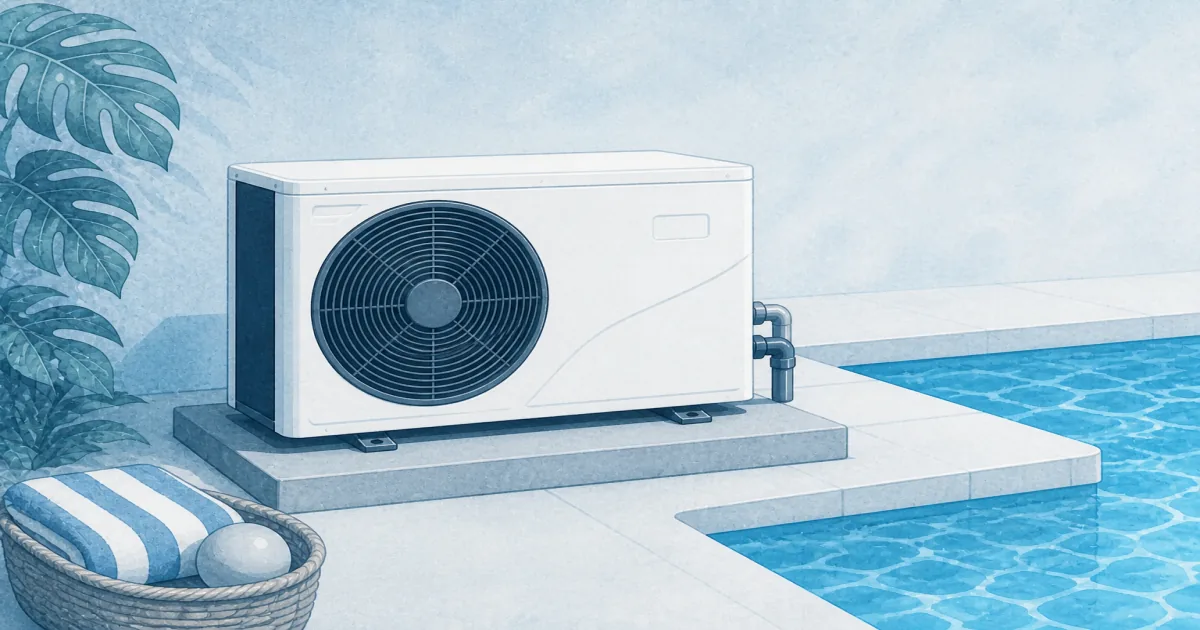
The short answer: Buy the FibroPool FH270 when you want a strong residential pool heat pump for mid-to-large gallons. Choose the Aquastrong 75,000 BTU inverter if you want heat/cool modes and WiFi scheduling. Step down to the FibroPool FH255 when the pool is closer to mid-size and 70k BTU would be oversized.
Our picks
A pool heat pump is how you stretch swim season without babysitting a propane flame. It pulls warmth from outdoor air, concentrates it, and hands it to the water through a titanium or similar exchanger. The tradeoff is honest: it needs mild air to stay efficient, it wants correct flow and voltage, and it is slower than gas when you are trying to jump ten degrees for Saturday.
If sun-only collectors fit your climate better, stay on the pool solar heater guide. If you mainly lose heat overnight, fix that first with a solar pool cover. This page is for active electric heating on a real equipment pad. More gear guides live on the blog, and the homepage maps the rest of the site.
Heat pump vs solar panels vs gas
Owners who skip a cover often blame the heater. The unit warmed the water. The night sky stole it. Put the cover on after swimming if you care about the electric bill.
Top pick: FibroPool FH270
The FibroPool FH270 is the pool heat pump most mid-to-large residential pools should start with. Seventy thousand BTU is enough headroom for many 10,000 to 15,000 gallon setups when air temps cooperate. The COP story matters more than brochure slogans: you want heat moved from air, not a giant resistive element cooking the water like a kettle.
Plan for 240V and a clear pad. Coils need air. A cramped corner against a fence kills efficiency and shortens fan life. Keep the filter clean so flow through the exchanger stays honest. Pair it with a variable speed pool pump schedule that raises speed while heating, then settles back for quiet overnight filtration.
Skip the FH270 if your shell is a small above-ground bowl. You will overspend on capacity you never use. That is the FH255 lane.
Best WiFi inverter: Aquastrong 75,000 BTU
The Aquastrong 75,000 BTU inverter is the pick when you want modern controls and heat plus cool modes. Inverter compressors ease off once the water is near setpoint instead of slamming full power every cycle. App scheduling helps when you travel or want the pool ready for evening swims without walking to the pad.
Use this lane for larger gallon counts and owners who already live in a smart-home habit. Confirm circuit size and plumbing adapters before the freight truck arrives. Heavy cabinets are not a Saturday “maybe” project.
Skip it if you only need a simple mid-size heater and dislike apps. FibroPool’s fixed-speed cabinets stay clearer for that brief.
Best mid-size: FibroPool FH255
The FibroPool FH255 is the right-sized pool heat pump when fifty-five thousand BTU matches the pool better than seventy. Smaller in-ground shells and larger above-ground pools often live here. You still get a metal outdoor cabinet and a salt-friendly exchanger story without paying for lagoon-class output.
It will disappoint on a big freeform pool in a cool climate. If mornings stay in the 50s and the surface area is huge, step up to the FH270 or the Aquastrong 75k instead of hoping a mid-size unit “works harder.”
Sizing, air, and flow that decide the outcome
- Match BTU to gallons and climate, not to the biggest number on the page.
- Give the cabinet open air on all sides. Hot discharge air recirculating into the intake is wasted money.
- Keep filter pressure in a normal range so the exchanger sees real flow.
- Cover the pool at night in shoulder season.
- Expect slower recovery than gas. Start heating a day early for parties.
Cold snaps expose weak sizing. If outdoor air drops below the unit’s comfort zone, output falls even when the compressor is running. That is physics, not a broken listing. For deep winter swimming, look at cold-climate inverter ratings or accept a gas hybrid for freeze weeks.
Track results with a pool thermometer, not hope. Morning and late-afternoon notes for one mild week tell you whether the BTU class fits. If the delta is tiny with the cover on and the filter clean, you undersized or the air is too cold for heat-pump work.
Install habits that keep the unit alive
Set it on a level pad, not soft dirt that sinks after rain. Keep leaves off the coil. Rinse debris gently when the season ends. Do not pressure-wash fins flat. Leave service clearance so a tech can reach valves and electrical without moving the whole cabinet.
Wire to the nameplate. Undersized breakers and shared dryer circuits are how people invent “random shutdowns.” If you are not comfortable with 240V work, hire an electrician who has done pool pads before. The heater is only half the install.
In fall, follow the maker’s winter steps for your climate. Some owners drain bypass loops. Others leave the unit powered for freeze protection modes. Read the manual for your model instead of copying a neighbor with a different brand.
Common mistakes
Buying gas-level expectations from a heat pump. Skipping the cover. Stuffing the unit in a closed closet. Running dirty filters that starve flow. Choosing 70k BTU for a tiny above-ground because the number looked impressive.
A pool heat pump rewards boring setup: correct voltage, open air, clean flow, and overnight covers. It also rewards patience on the first cool week. Give it a stretch of mild days before you decide the product “does not heat.”
Bottom line
Choose a pool heat pump when you want electric season extension with more control than solar panels alone. Start with the FibroPool FH270 for most mid-to-large pools, move to the Aquastrong 75,000 BTU inverter when WiFi and heat/cool matter, and keep the FibroPool FH255 for mid-size shells that do not need lagoon output.
Frequently Asked Questions
What is a pool heat pump?
It is an electric heater that moves heat from outdoor air into pool water through a compressor and exchanger. Think of it as an air conditioner running in reverse for the pool, not a propane burner.
Is a pool heat pump the same as a solar heater?
No. A pool solar heater needs sun on panels. A pool heat pump needs mild outdoor air and electricity. Many owners use a solar cover with either setup so overnight heat does not escape.
How warm will it get the water?
Expect steady maintenance heat in spring and fall when nights are cool but days are not freezing. It is slower than gas. It is cheaper to run for long hold temperatures if the air is warm enough for the unit’s rating.
What temperature does outdoor air need to be?
Most residential units lose output as air cools. Plan for shoulder season, not deep winter plunge heating, unless you buy a cold-climate inverter model and accept slower recovery.
Do I need a special pump?
You need adequate flow through the heater. Many pads already have it. A variable speed pool pump helps because you can run a higher heat speed while the compressor is on, then drop back for filtration.
240V or 115V?
Larger BTU cabinets usually want 240V hardwired circuits. Smaller plug-and-play units exist for compact pools. Match the nameplate before you buy breakers and wire.
Where should I place it?
On a solid pad with clear airflow on the intake and discharge sides. Do not bury it in a closed shed. Leave service space so coils stay clean.
How do I know it is working?
Track morning and evening water temps with a pool thermometer for a week. A working unit shows a clear climb when air is mild and the cover is on overnight.