Automatic Chlorine Feeder (2026): In-Line vs Offline Hayward Picks
An automatic chlorine feeder mounts on the equipment pad and dissolves tablets into return water. Pick Hayward CL200 for in-line PVC, CL220 for offline tubing, or CL100 for smaller flow systems.
By Nate Brooks
Poolsidebasics is reader-supported. As an Amazon Associate we earn from qualifying purchases. Learn more.
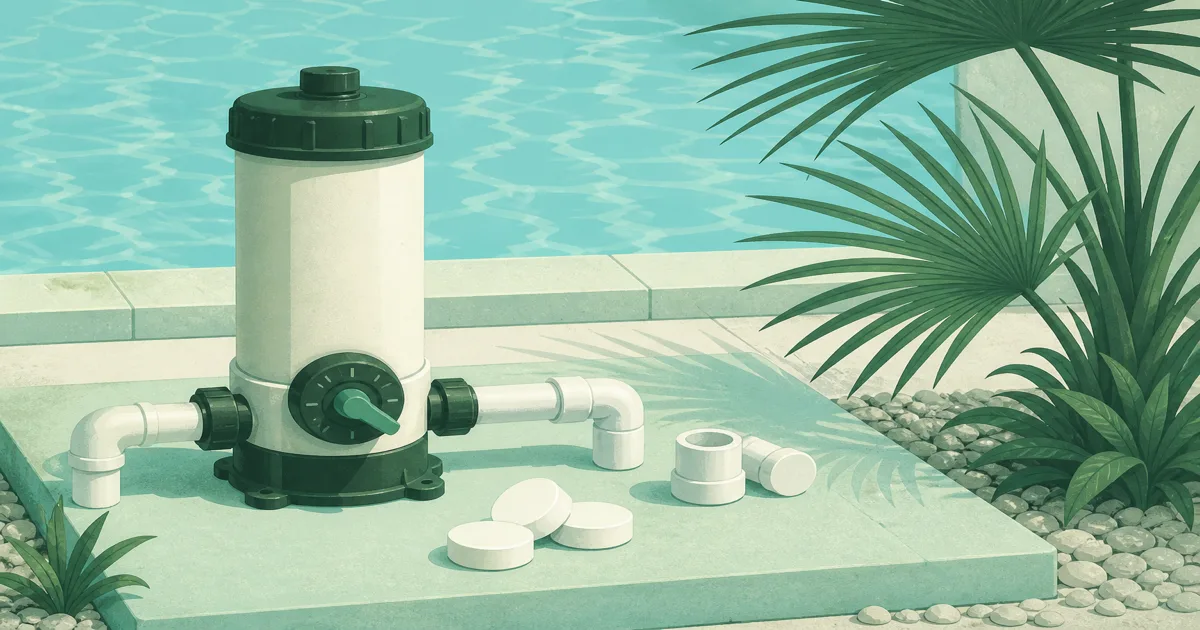
The short answer: Buy the Hayward CL200EF (paid link) if you can plumb an in-line feeder after the filter. Choose the Hayward CL220EF (paid link) for an offline tubing install, or the Hayward CL100 (paid link) when the pool and pump flow are smaller.
Our picks
An automatic chlorine feeder (paid link) is a sealed canister on the equipment pad that dissolves tablets into return water while the pump runs. You set a dial, refill tablets, and stop fishing a floating basket out before every swim.
It is not set-and-forget forever. You still test, and you still shock after parties or storms. Browse water care and keep the best pool test kit pillar next to the pad. More guides live on the blog, and the homepage maps the rest of the site.
Feeder vs floater vs salt cell
A feeder wins on convenience and tablet control. A floater wins on price and simplicity. A salt system is a different project with its own cell sizing and salt bags.
How to choose an automatic chlorine feeder
Always plumb after filtration. Tablet water through a dirty filter or heater is how owners invent expensive repair stories.
Top pick: Hayward CL200EF in-line
The Hayward CL200EF (paid link) is the default automatic chlorine feeder for a typical in-ground PVC pad. You cut into the return after the filter, mount the canister, and dial the feed rate once free chlorine readings settle.
Owners like the roughly 9 lb capacity because summer weeks stop turning into daily tablet chores. Plan the cut carefully, dry-fit first, and consider unions. Opening a glued-only feeder in February is a special kind of regret.
Best offline: Hayward CL220EF
The Hayward CL220EF (paid link) keeps the same feeder idea without forcing a hard cut on the main return. Inlet and outlet tubing tap the system so the canister can sit where the pad has room.
Pick this when the equipment cluster is crowded, the pipe run is awkward, or you want a retrofit that is easier to reverse. Watch the tubing clamps. Offline installs fail at fittings more often than at the canister body.
Best smaller pad: Hayward CL100
The Hayward CL100 (paid link) fits smaller pools and lower-flow setups that do not need CL200 capacity. Same brand habit, smaller footprint, less tablet inventory sitting on the pad.
If your large in-ground pool eats trichlor every few days on a hot week, step up. Undersizing the feeder just means more refill trips and a dial stuck wide open.
Quick compare
Bottom line
Buy the Hayward CL200EF (paid link) for a clean in-line automatic chlorine feeder install. Buy the CL220EF when offline tubing is smarter. Buy the CL100 for a smaller system. Match tablet size to the canister, plumb after the filter, and test until the dial earns your trust.
Frequently Asked Questions
Is an automatic chlorine feeder better than a floater?
A feeder keeps tablets out of the pool and doses through plumbing. A pool chlorine floater is cheaper and needs no PVC work. Pick the feeder when you want pad-side control.
Where does the feeder go in the plumbing?
After the filter and heater on the return side, never before the filter. Tablet water is harsh on filter media and heater guts if it loops the wrong way.
In-line CL200 or offline CL220?
Choose CL200 when you can cut PVC cleanly. Choose CL220 when tubing taps are easier than a hard pipe cut-in.
Can I use bromine tablets in these feeders?
Many Hayward feeders accept slow-dissolving chlorine or bromine tablets when the label allows. Do not mix leftover chemistries in the same canister.
Do I still need to test the water?
Yes. The dial is not a brain. Test free chlorine and adjust the feed rate. Use a kit from best pool test kit.
Will it work with a salt system?
Usually as a backup tablet source when the cell is offline or after a heavy bather week. Keep the dial low so you do not spike CYA from too many trichlor tabs.
How often do I refill tablets?
Depends on pool size, dial setting, and water temp. Check the canister weekly at first, then settle into a rhythm once readings stabilize.