Salt Water Chlorinator (2026): Cell Size, Install Reality, and Starter Kit
Size a salt water chlorinator to your gallons, plan plumbing and power, then buy clean pool salt. The CircuPool SJ55 plus Morton bags is a solid starter kit.
By Nate Brooks
Poolsidebasics is reader-supported. As an Amazon Associate we earn from qualifying purchases. Learn more.
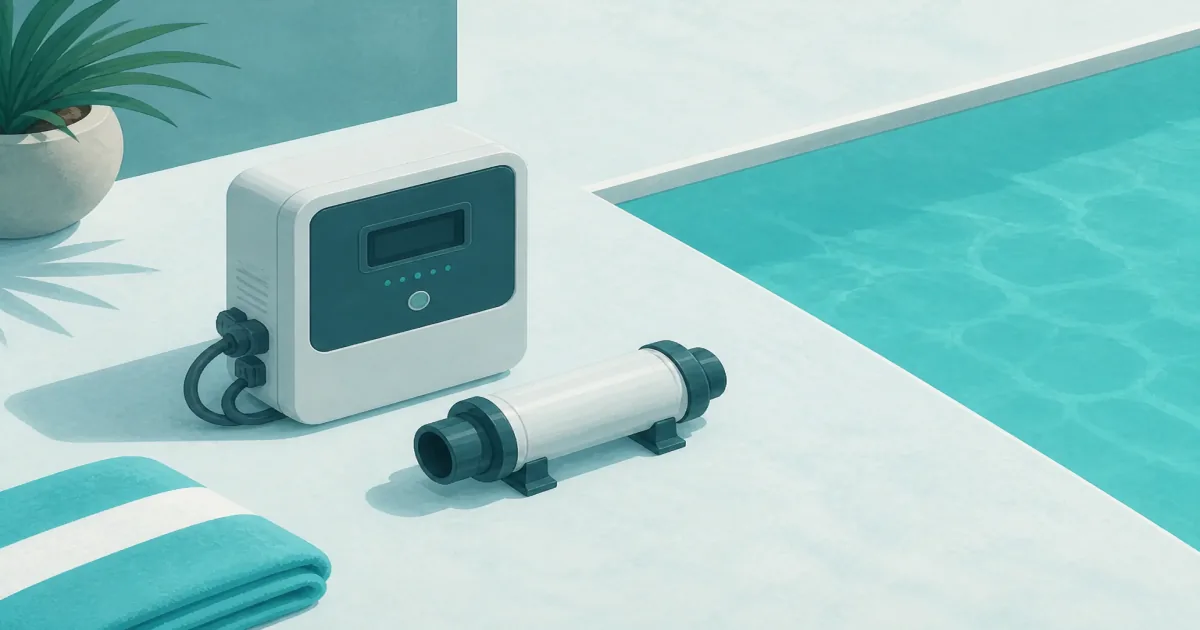
The short answer: Choose a salt water chlorinator by pool gallons and plumbing reality, not by brochure softness claims. The starter kit here is the CircuPool SJ55 Salt Chlorine Generator System (paid link) plus Morton Professional Commercial Grade Pool Salt (40 lb) (paid link) bags sized to your salinity target.
Our picks
A salt system is a chlorine factory on your equipment pad. Dissolve the right pool salt, run water through the cell, and the unit generates sanitizer while the pump is on. You are not escaping chemistry. You are changing how you buy and dose it.
This page is for owners deciding whether to convert, and what to put in the cart first. It is not a full electrician’s course.
Who a salt water chlorinator is for
Good fit when:
- You hate weekly tablet handling and floater babysitting.
- Your pool volume is stable and you will test salinity a few times a season.
- The pad has space for a cell and a control box, with workable power.
- You want steadier residual once the system is tuned.
Poor fit when:
- The pool is tiny and seasonal, and a jug of liquid is honestly enough.
- Nobody will clean a scaled cell or watch low-salt warnings.
- You expected “no chlorine” marketing to be literal.
Size the cell before you fall in love with a brand
Gallon rating is the first filter. Buy a unit with headroom above your real volume. Hot summers and crowded weekends raise chlorine demand. An undersized cell runs flat-out and still leaves free chlorine low.
Also check:
- Minimum and maximum flow for the cell
- Plumbing size (1.5 inch vs 2 inch unions)
- Power requirements and GFCI rules
- Whether you need a flow switch (most complete systems include one)
If your pool is a small above-ground setup, look for systems labeled for that plumbing and gallon range instead of forcing a large in-ground generator onto flexible hoses.
Kit item 1: CircuPool SJ55
CircuPool SJ55 Salt Chlorine Generator System (paid link) is the hardware pick in this kit for larger backyard pools up to the labeled 55,000 gallon maximum. It ships as a system: control module, electrolytic cell, and flow switch. The self-cleaning reverse polarity design is there to cut down on constant acid baths for the cell.
It is still an install. You need correct unions, flow, and power. Read the manual for salinity targets and output settings. Owners who succeed treat startup like a project: measure gallons, plumb the cell, add salt to target, then tune output over a few days while testing free chlorine.
If your pool is far smaller than this class of cell, choose a smaller CircuPool SJ-series unit or an above-ground-specific system instead of oversizing blindly.
Kit item 2: Morton pool salt
The cell does nothing without salt in range. Morton Professional Commercial Grade Pool Salt (40 lb) (paid link) is the bag we pair with the generator for startup and top-ups. Calculate pounds from your current ppm and target, then buy enough bags. One bag is a top-up. A first fill is a stack.
Dissolve with circulation, brush leftovers, and confirm with pool salt test strips. Full bag guidance lives on the pool salt page so this guide does not turn into a duplicate salt essay.
Install reality in plain English
- Confirm pump flow and filter are healthy before you add a cell.
- Plumb the cell on the return side per the manual, with unions you can service.
- Mount the control box where it stays dry and readable.
- Wire to code. If that sentence makes you nervous, call a pro.
- Add salt to target, circulate until dissolved, then enable the chlorinator.
- Test free chlorine, pH, and alkalinity daily at first. Adjust output slowly.
Balanced water still matters. High pH scales cells. Low chlorine after a storm still needs a backup dose. Keep a best pool test kit on the shelf.
What salt systems do not replace
They do not replace filtration, brushing, or occasional shock. They do not fix a failing pump. They do not make algae impossible. When demand spikes, pool liquid chlorine or a proper shock plan is still useful.
They also do not erase cyanuric acid management forever. Some owners still use a little stabilizer. Follow the chlorinator maker’s guidance so you do not fight the cell with extreme CYA.
Startup week checklist
Day one is plumbing and power. Day two is salt and circulation. Days three through seven are output tuning.
Test free chlorine each morning at first. If you wake up near zero after a hot crowd weekend, bump output a notch or add a measured liquid dose, then retest that evening. Chasing the display without a test kit is how people overshoot and irritate skin.
Watch for low-salt and no-flow alarms. A dirty filter or a closed valve can look like a dead cell. Clear the hydraulic problem before you order a replacement cell.
Keep the area around the control box readable. If the display faces a hose blast zone, you will stop checking it, and small problems become green water.
Cost and expectation
Salt systems cost more up front than a season of tablets. They save handling time when they are sized right. They do not make chemistry free. You still buy salt, test kits, and occasional backup sanitizer. Budget for a replacement cell after years of use. That is normal wear, not a scam.
If your pool is open only a short northern season, run the payback math honestly. A long warm season with heavy use is where the kit pays you back in fewer tablet runs.
Bottom line
A salt water chlorinator is worth it when you size the cell to your gallons and accept a real install. Start with the CircuPool SJ55 for large residential pools, stage Morton Professional Commercial Grade Pool Salt bags for the salinity target, test as you tune output, and keep a backup sanitizer for the weekends the cell cannot keep up alone.
Frequently Asked Questions
What does a salt water chlorinator do?
It passes salty pool water through a cell that generates chlorine. You still have chlorine in the water. You just buy salt bags instead of living on tablets every week.
Is a salt pool chlorine-free?
No. Salt systems make chlorine. The water often feels softer and smells less harsh when the system is tuned, but free chlorine still matters. Test it.
How do I size the cell?
Match the manufacturer’s gallon rating to your pool volume with headroom for heat waves and heavy swimmer load. Undersizing is the common DIY mistake.
Can I install a salt water chlorinator myself?
Some owners can handle unions and a control box when the pad already has space and correct power. Electrical work and bonding rules are not casual projects. Hire help when the manual or local code says so.
How much salt does the system need?
Usually a few thousand ppm, not ocean levels. Follow the chlorinator chart and confirm with pool salt test strips. Details on bags live in pool salt.
Do I still need liquid chlorine or shock?
Yes, sometimes. Parties, storms, and algae blooms can outrun the cell. Keep a backup plan with pool liquid chlorine or a suitable pool shock.
Will a salt system work on an above-ground pool?
Some units are built for above-ground plumbing and smaller gallon counts. A large in-ground cell on a tiny soft-sided pool is the wrong kit. Read the gallon and flow limits.
What maintenance does the cell need?
Keep salinity in range, watch the flow switch, clean the cell if scale builds, and replace the cell when output fades after years of use. Balanced pH slows scale.