Pool Stain Remover (2026): Match the Fix to Rust, Scale, or a Metal Stain
The best pool stain remover depends on what the mark actually is. Surface scale, rust spots, and metal staining do not all need the same fix.
By Alex Turner
Poolsidebasics is reader-supported. As an Amazon Associate we earn from qualifying purchases. Learn more.
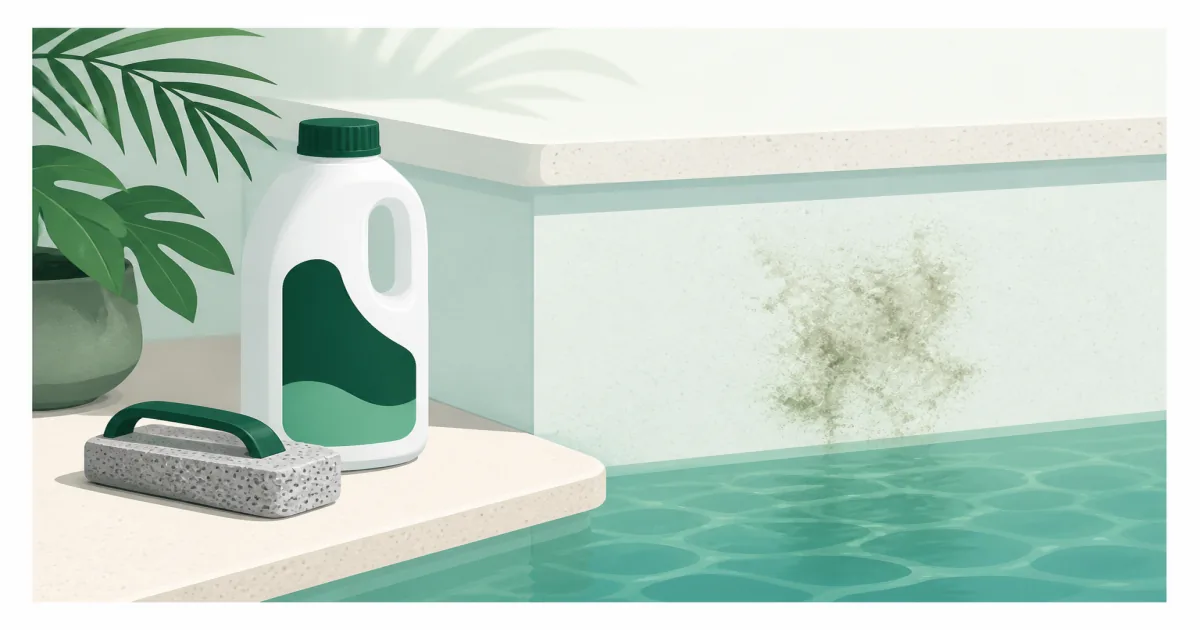
The short answer: The best pool stain remover depends on what made the stain. Alden Leeds Sparkle Conquest is the better fit for broader metal-related staining in the water. Pool Pumice Stone with EZ-Clip Handle is better for small, stubborn scale or rust spots on plaster and concrete.
Our picks
The phrase pool stain remover sounds simple, but pool stains are not simple. A rough white ring, a rusty brown spot, and a broad metal tint on the finish can all show up in the same season, and none of them want exactly the same fix. That is how people end up scrubbing the wrong surface with the wrong tool or pouring a chemical into the water and wondering why one stubborn spot is still sitting there.
The smarter move is to identify the kind of stain first, then buy the remover that matches the job.
Work out whether the stain is in the water or on the surface
Some stains are really surface problems. A calcium mark or rough rust spot on plaster often wants local pressure. Other stains are tied to metals in the water and show up more broadly. That is where a whole-water pool stain remover makes more sense.
Start by looking and feeling:
- Rough or crusty usually points toward scale
- A small isolated brown or orange spot can be rust
- A wider tinted area can point toward metals in the water
If you are not sure, do not start with the harshest tool. A quick water check from our best pool test kit guide helps you avoid guessing your way into surface damage.
Use a chemical treatment when the stain problem is broader
Alden Leeds Sparkle Conquest is the better choice when the issue feels bigger than one tiny mark. This kind of pool stain remover fits the owner who is treating staining through the water, not just rubbing one visible spot beside the steps.
That matters because broad metal staining usually comes back if you only attack the part you can see. The water story needs attention too. If stains keep returning after treatment, you may need a follow-up plan around metal control instead of repeating the same cleanup over and over.
Use a spot tool only on the right surface
Pool Pumice Stone with EZ-Clip Handle is the tool for a narrow job on a hard surface. It makes sense when the problem is a small rough stain on plaster or concrete and you want controlled scrubbing instead of a whole-pool treatment.
It does not belong on vinyl and it is not a casual fix for every finish. That is the big reason a pumice-style pool stain remover can be great in one pool and a terrible idea in another.
Do not scrub first and diagnose later
This is where people make the weekend harder than it needs to be. If you attack a stain before you know what it is, you can waste the chemical, scratch the wrong surface, or miss the reason the mark is there at all.
For example, a pumice tool may help with rough buildup but does nothing for a wider metal issue in the water. A chemical pool stain remover may help with overall staining but still leave a hard crust that needs hand work. Matching the tool to the stain is the whole game.
When the stain keeps coming back
A stain that returns quickly is telling you the source is still there. That might be metals in the fill water, old hardware, or a chemistry pattern that keeps letting the problem redeposit. In that case, a single pool stain remover treatment is only half the plan.
If the issue looks tied to metals, a follow-up metal-control strategy usually matters more than another round of random scrubbing. If the water is also dull or overloaded with other chemistry issues, solve those too before you blame the remover.
Common mistakes to avoid
The first mistake is using the wrong remover category. The second is getting impatient and scrubbing too hard. The third is treating the visible mark while ignoring the water balance and the source.
Another common mistake is using a spot-treatment tool because it feels cheap and immediate, even when the real issue is broader. A narrow tool is satisfying when you can see progress, but it is not always the right pool stain remover for the actual problem.
Bottom line
The best pool stain remover is the one that matches the stain you really have. Alden Leeds Sparkle Conquest is the stronger fit for broader metal-related staining in the water. Pool Pumice Stone with EZ-Clip Handle is the right call for small scale or rust spots on plaster and concrete. Diagnose first, then treat, and do not force one remover to solve every kind of stain.
Frequently Asked Questions
What is the best pool stain remover for every pool stain?
There is not one. A pool stain remover has to match the mark. Metal stains, scale, and surface rust do not all need the same product or the same technique.
How do I tell if a stain is from metal or scale?
Scale usually feels rough. Metal stains often look more like a color mark in the surface. If you are not sure, test the water first and avoid attacking the finish too aggressively.
Can I use a pumice stone on any pool?
No. A pumice-style pool stain remover is for plaster or concrete only. Do not use it on vinyl or fiberglass.
What if the stain keeps coming back?
The source is probably still in the water or still entering the pool. That may point you toward metal control instead of repeated scrubbing.
Should I lower pH before treating a stain?
Sometimes balancing the water helps, but do not make random chemistry changes first. Use a real test and understand the stain type before you start.
Can pool stain remover fix algae marks?
Not always. Some dark spots are organic or algae-related, which is a different cleanup path than calcium or iron staining.
Is it safe to scrub hard with a stain tool?
Only on the right surface and only with control. More force is not always better, especially near older plaster.