Pool Phosphate Test Kit (2026): Strips vs a Photometer Before You Buy Remover
A pool phosphate test kit tells you whether you actually have a phosphate problem or just cloudy water with a different cause.
By Nate Brooks
Poolsidebasics is reader-supported. As an Amazon Associate we earn from qualifying purchases. Learn more.
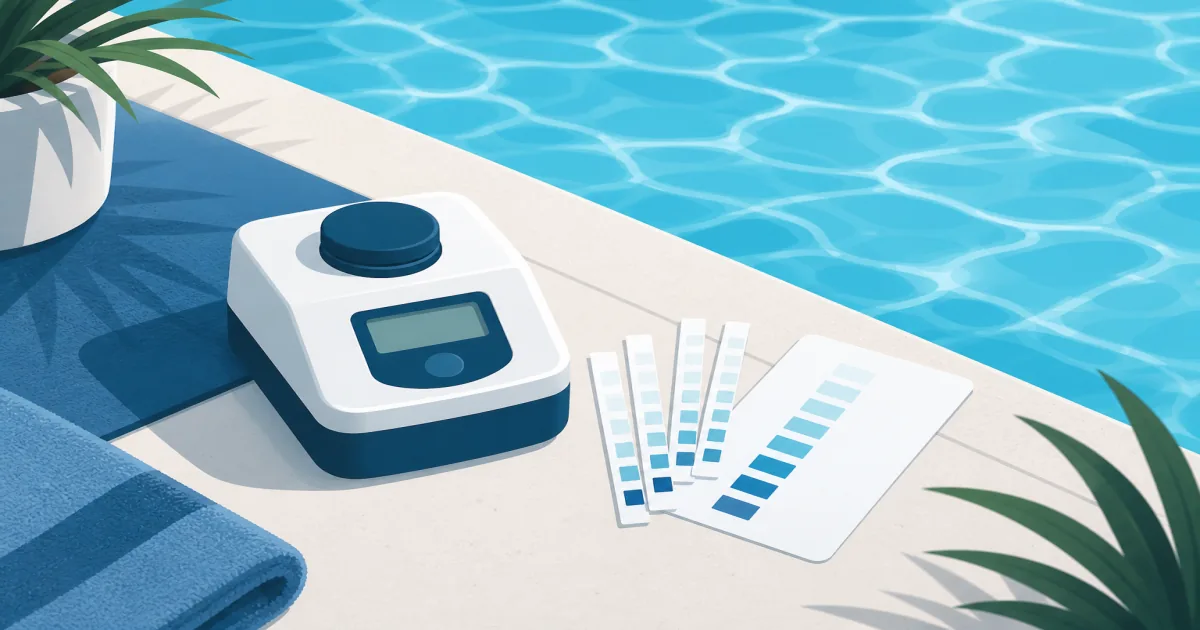
The short answer: A pool phosphate test kit is worth buying when you are about to spend money on phosphate remover or when algae keeps coming back and you want proof, not guesses. The 50-count strip kit with color tube is the easy home choice. The Pool Exact EZ Photometer Master Pool Test Kit is the better fit if you want more detailed chemistry tracking.
Our picks
People buy phosphate remover far too early. A pool-store clerk says the phosphates are high, the water is a little dull, and suddenly another bottle is in the cart. A pool phosphate test kit helps you slow down and check whether phosphates are really part of the problem or whether you actually need more chlorine, better filtration, or a cleaner cartridge.
That is why this category matters. You are not buying it to admire the number. You are buying it to stop treating pool chemistry like a guess.
Test before you buy remover
Phosphates can feed algae, but they are not magic. A clear pool with stable sanitizer can still have phosphate in the water and behave just fine. On the other hand, a messy pool can have a phosphate issue and a chlorine issue at the same time.
So the first job of a pool phosphate test kit is simple: tell you whether phosphate remover even belongs in the conversation. If you are already reading our pool phosphate remover guide, this should usually come first.
It is the same logic as every other decent pool decision. Test, then buy.
Strips are enough for most backyard checks
The Phosphate Test Kit 50 ct with Colorimetric Tube is the sensible recommendation for a normal backyard pool. You get a quick test routine, enough strips to check before and after treatment, and a low-cost way to confirm whether the issue is worth acting on.
That matters because a pool phosphate test kit is often a decision tool, not a daily ritual. You want to know whether the level is clearly low, clearly high, or stubborn after treatment. Strips are good at that job.
If you only test for phosphates a few times each season, paying photometer money usually does not make sense.
A photometer is better when you want chemistry detail
The Pool Exact EZ Photometer Master Pool Test Kit is for the owner who wants more than a quick strip answer. It covers several chemistry points, not just phosphates, and fits the kind of person who keeps records and likes repeatable results instead of eyeballing colors.
That does not make it necessary for everyone. It makes it useful for the owner who is already deep enough into pool care that a more detailed tool saves time and second-guessing.
When phosphate testing actually helps
Use a pool phosphate test kit when algae keeps coming back even though chlorine management seems reasonable, when you are deciding whether to buy phosphate remover, or when a store printout made a big claim and you want to double-check it at home.
It is also helpful after treatment. If you already used remover, testing again tells you whether the level really dropped or whether you just added another bottle and hoped for the best.
What it does not do is replace core water testing. You still need a normal kit for chlorine, pH, and alkalinity. Our best pool test kit guide covers those basics. A phosphate result with no chlorine context is only half a story.
Do not treat the number like a panic alarm
This is where people get themselves into trouble. They see a high reading and assume they found the master cause of every pool problem. Sometimes they did not. A clear pool with good sanitizer can keep behaving well even if phosphate is not perfect. A swampy pool will not get fixed just because phosphate went down.
Think of a pool phosphate test kit as part of diagnosis. It is useful because it narrows the decision, not because it gives you one magic answer.
If your water is also hazy, go read pool clarifier. If it is turning green, look at pool algaecide only after chlorine basics are handled. Pool chemistry gets expensive when every issue gets treated as a separate shopping trip.
The simple buying rule
Buy strips if you want a quick yes-or-no check before treatment and a way to confirm progress after. Buy the photometer if you know you will use the broader chemistry detail and you actually like tracking numbers.
That is it. The best pool phosphate test kit is the one that gives you enough confidence to make the next call without overbuying the tool.
Bottom line
A pool phosphate test kit is most valuable when it saves you from buying chemistry on a guess. The 50-count strip kit with color tube is the straightforward home pick for quick checks. The Pool Exact EZ Photometer Master Pool Test Kit is the better option when you want more detailed water data in one tool. Test first, then decide whether phosphate remover is really worth your time and money.
Frequently Asked Questions
Do I need a pool phosphate test kit for every pool?
No. Many pools run fine without you checking phosphates often. A pool phosphate test kit is most useful when algae keeps returning, you are considering phosphate remover, or you want to confirm a pool-store printout at home.
What does a pool phosphate test kit measure?
It measures the phosphate level in the water. That helps you decide whether phosphate remover belongs in the plan at all.
Are strips accurate enough?
Strips are usually good enough for a home yes-or-no decision and for tracking a trend. If you want a more detailed readout or you test often, a photometer-style tool can make more sense.
Should I buy phosphate remover before I test?
No. Test first. If phosphates are not the issue, remover is just extra cost and extra chemistry.
Will lowering phosphates fix algae by itself?
No. Chlorine and circulation still do the real cleanup work. A phosphate issue is one part of the picture, not the whole picture.
How often should I test phosphates?
Only as often as your pool needs it. For many owners, that means testing during a recurring algae or cloudy-water problem, then checking again after treatment.
What if my phosphate reading is high but the pool looks fine?
That is a judgment call. A high reading does not force an emergency. If sanitizer is stable and the pool stays clear, you may decide to watch it instead of treating immediately.