Pool Leaf Canister (2026): When Your Vacuum Needs One
A pool leaf canister catches leaves before they reach the pump basket. It is most useful for suction-side cleaners and manual hoses under trees.
By Nate Brooks
Poolsidebasics is reader-supported. As an Amazon Associate we earn from qualifying purchases. Learn more.
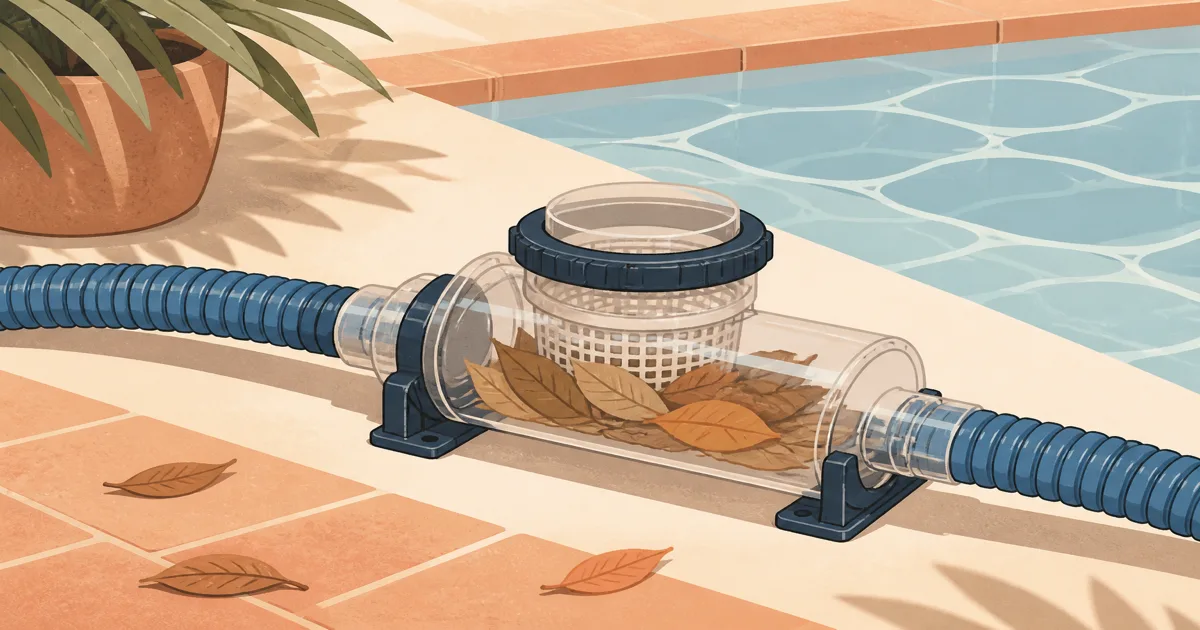
The short answer: A pool leaf canister is worth adding when leaves keep filling your pump or skimmer basket during vacuuming. It is a debris catcher, not a cure for poor suction.
Our picks
An inline leaf canister gives leaves a place to stop before they pile into equipment that is harder to reach. It is especially helpful under trees, after a storm, or with a suction-side cleaner that runs often. The clear body is useful because it tells you when to empty the basket before the cleaner slows down.
The Hayward W560 PoolVac Navigator Standard Leaf Canister was checked on a live US Amazon listing. It shows a rating above 4.0 stars and a large body of real owner feedback about debris collection and compatibility. We compared listing details and review patterns rather than testing it in a pool.
A canister is for debris, not fine dirt
The basket catches leaves, twigs, acorns, and other larger material. Fine sand and algae still belong in the pool filtration system. Think of the canister as a first stop that keeps a large leaf load from blocking the path to the pump.
If you only have a few leaves, emptying the skimmer basket may be enough. If you stop several times each cleanup because the basket is packed, a canister can save time and help preserve water flow.
Put it in the right part of the hose
Follow the canister maker's direction for hose orientation and connections. With a compatible suction-side system, the canister normally sits inline between the cleaner hose and the skimmer or suction connection. Make sure each cuff is fully seated. A loose connection pulls air and can make the cleaner crawl slowly or the manual head float.
Before starting, prime the hose underwater. Then run the pump and look through the clear body after a few minutes. Stop to empty the basket before it blocks the water path.
Check fit before you order
The W560 is designed for compatible 1.5-inch cleaner hoses. That does not make it a universal fit for every manual setup, robotic cleaner, or vacuum port. Check the hose size, the type of cleaner you own, and whether the listed connections match your equipment.
For a hose-first troubleshooting check, read our pool vacuum hose guide. A split cuff, bad swivel, or air leak can look like a debris problem when it is really a connection problem.
Keep the rest of the system clean
A leaf canister reduces the load on the skimmer and pump baskets, but it does not eliminate routine checks. Empty the canister, then inspect the skimmer basket and pump basket before closing up. If water stays cloudy, test the chemistry and check the filter rather than adding more hardware.
Bottom line
Use a pool leaf canister when large debris is constantly interrupting vacuuming or a suction-side cleaner. The Hayward W560 is a strong option for the compatible hoses it lists. Confirm connection size first, keep the basket emptied, and do not expect it to fix an air leak or dirty filter.
Frequently Asked Questions
What does a pool leaf canister do?
It traps leaves and larger debris in the vacuum line before they reach the skimmer or pump basket.
Does every pool vacuum need one?
No. It is most helpful for pools with lots of leaves or suction-side cleaners that collect debris often.
Where does the canister go?
It installs inline between the cleaner or vacuum hose and the skimmer connection, following the manufacturer directions.
Will a leaf canister improve weak suction?
It will not repair a leak or dirty filter, but it can prevent a full basket from choking flow.
How often should I empty it?
Empty it before the basket is packed. Check it more often after wind or heavy leaf fall.
Will it fit my hose?
Check the hose diameter and cleaner compatibility. Many canisters are built for 1.5-inch suction-side hoses.